Walls and masonry
Bowing wall repairs and lateral restraint
Bowing wall repairs are repairs that stop a bulging or leaning masonry wall moving further, usually by fixing it back to the floors and roof with restraint ties and straps, and rebuilding only the sections too distorted to keep.
Guide price from£1,000per wall inc VAT
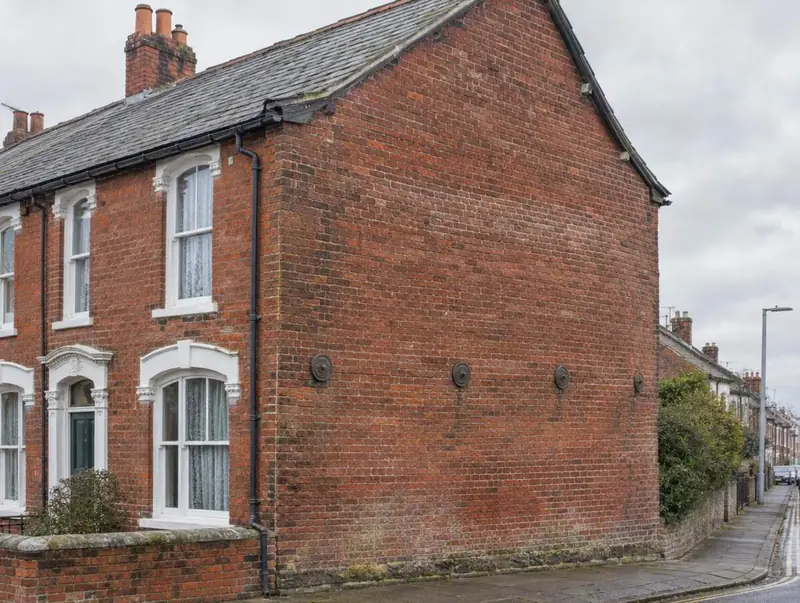
A masonry wall is strong when it is pressed down from above and held at each floor and at the roof. Take away that sideways support and even a thick wall can start to lean or belly outward. This is especially common in the solid nine-inch walls of Victorian and Edwardian terraces, where floor joists often run parallel to the front and side walls and were never properly tied to them in the first place.
Most bowing walls can be kept. The usual repair is lateral restraint: new connections between the wall and the floor and roof structure so the wall can no longer move outward. Where a wall has moved a long way, bricks have crushed or the two halves of a solid wall have separated, that section may need taking down and rebuilding. An engineer’s view decides which, and an independent chartered structural engineer can be arranged.
What are the signs you need bowing wall repairs?
- A visible belly in the wall when you sight along it
- Gaps opening between floorboards and the skirting on an outside wall
- Horizontal cracking at first-floor or ceiling level
- Window frames pulling away from the brickwork at the sides
- Gutters or the roof edge no longer lining up with the wall
- Internal plaster cracks where a wall meets the ceiling
What causes it?
Joists that run parallel to the wall
In many older houses the floor joists span from front to back, so they sit beside the side walls rather than on them. Nothing then ties those walls to the floor. Over a century of wind, thermal movement and minor settlement, the wall can drift outward at mid-height.
Removed or weakened internal walls
Internal walls and chimney breasts brace the outer walls. When they are knocked through or cut back without replacement support, the outer wall loses a restraint point and can begin to bow. This is a structural concern that an engineer should look at before any repair.
Roof spread
A roof that lacks proper ties at ceiling level pushes its supporting walls outward at the top. The result is a lean or bulge near the eaves, often with cracking just below the wall plate. Re-tying the roof is part of the repair, not just restraining the wall.
Delaminating solid walls
A solid brick wall is built in two or more layers bonded together by headers. Poor bonding, frost damage or rusting embedded iron can let the outer layer separate and bulge away from the inner. The wall then needs stitching or rebuilding rather than restraint alone.
How is it repaired?
Restraint ties into the floor
Stainless restraint ties are drilled through the wall and fixed into the floor joists or into blocking between them. Where joists run parallel, noggins are fitted across several joists so the tie has something solid to hold. A neat plate or a buried fixing is left on the outside face.
Best for: Walls bowing at floor level where joists run alongside
Lateral restraint straps
Galvanised or stainless straps are fixed across three or more joists or rafters, turned down against the inside face of the wall and fixed into the masonry. They work well at ceiling and roof level, where the fixings stay hidden.
Best for: Gables and walls bowing near ceiling or roof level
Stitching a delaminating wall
Where the layers of a solid wall have separated, long stainless ties are drilled in from the face and bonded into the inner layer to bind the wall together again. This is often combined with restraint ties, so the wall is both reconnected through its thickness and tied back to the structure.
Best for: Solid walls where the outer layer has pulled away
Partial rebuild
A section that has bowed beyond safe limits, or where bricks have crushed, is propped, taken down and rebuilt plumb with restraint built in. It is the most disruptive option, so it is kept to the area that genuinely needs it.
Best for: Badly distorted sections that cannot be tied back
How much will bowing wall repairs cost?
Cost depends on the length of wall involved, how many ties or straps are needed, how much floor or ceiling must be opened, and whether any section has to be rebuilt. Scaffold and redecoration inside add to the total.
| Item | Guide price | Per |
|---|---|---|
| Lateral restraint for a typical gable | £1,000 – £3,000 | per wall |
| Remedial restraint ties installed | £25 – £60 | per tie |
| Partial rebuild of a badly distorted sectionest. | £3,000 – £8,000 | per section |
See regional prices on the prices page or work out a guide price for your home with the guide price tool.
What happens, step by step?
Assess the bow
We look at where the wall bows, how far it is out of plumb and how the floors and roof meet it. Photographs from your phone held flat against the wall often show the shape clearly before anyone visits.
Decide restrain or rebuild
If the wall is badly out of plumb, has bricks crushing or follows removed internal walls, we recommend an engineer, and can arrange one. Their view sets whether restraint is enough or a section needs rebuilding.
Open up inside
Floorboards or a ceiling strip are lifted along the affected wall to expose the joists. We fit noggins where joists run alongside, and plan furniture moves with you, since this is the most disruptive part of the job.
Fit the ties and straps
Ties are drilled through and fixed, or straps fitted and secured, at the spacing specified. Any rebuild is carried out at this stage, with temporary propping in place until the new brickwork has gained strength.
Close up and make good
Boards are relaid, plaster and outside fixings made good, and cracked joints repointed. You receive a record of the restraint positions, which helps if you sell or if an engineer needs to check the wall again later.
How long will bowing wall repairs take?
Fitting restraint to one wall usually takes one to three days, while a partial rebuild adds roughly a week depending on its size.
Do you need building control or a party wall notice?
England and Wales
Restraint work to an existing wall is generally a repair, but a rebuild, or work following a removed internal wall, is likely to bring in building control, since Part A covers structural safety. If the bowing wall is a party wall, the Party Wall etc. Act 1996 may need two months’ notice.
Scotland
Rebuilding part of an external wall is structural work that generally needs a building warrant before starting and a completion certificate afterwards. Restraint repairs alone may not, so check with your council’s verifier.
Northern Ireland
Your council’s building control can advise whether a restraint scheme or rebuild needs approval under the Building Regulations (Northern Ireland) 2012. Shared walls are a private matter between neighbours, with no Party Wall Act.
What if you have an insurance claim open?
Bowing caused by missing restraint or long-term deterioration is not usually covered by buildings insurance. If the bow appeared suddenly, follows ground movement, or came after works next door, tell your insurer before permanent repairs start and let them investigate. A loss adjuster or engineer may want measurements first. We can price to your loss adjuster’s or engineer’s schedule, and to an engineer’s restraint design where you have one.
Bowing wall repairs: frequently asked questions
How much do bowing wall repairs cost?
Lateral restraint for a typical gable usually costs £1,000–£3,000 per wall, with individual remedial restraint ties at about £25–£60 each installed. A partial rebuild of a badly distorted section is typically £3,000–£8,000. Each is a guide price inc VAT that varies by region and access, with the final figure confirmed in writing after a survey.
Is a bowing wall dangerous?
A bowing wall is not always dangerous, but it should never be ignored. Many have been slightly out of line for decades. A bow that is growing, crushing bricks or appeared after building work is more serious, and an engineer should look at it promptly. Your engineer will confirm.
Can a bowing wall be pushed back straight?
Usually not. Masonry rarely returns to plumb without cracking, so the normal aim is to stop further movement and leave the wall where it is. If the bow is too great to accept, that section is rebuilt rather than forced back.
What is lateral restraint?
Lateral restraint is the connection that stops a wall moving sideways, provided by tying it to the floors and roof. Older houses often have little or none, especially where joists run parallel to the wall. Remedial ties and straps add that connection after the event.
Do restraint ties show on the outside?
Some do and some do not. Certain ties leave a small round or square plate on the outside face, while others are fully recessed and pointed over. Straps fitted from inside leave no outside trace at all. We agree the finish with you before work starts.
How do I know if my wall is bowing?
Hold a long spirit level or a taut string against the wall and look for a gap in the middle. From inside, gaps between floorboards and skirting on an outside wall are a common clue. Photos showing the gap help us judge it before a visit.
Does a bowing wall need an engineer?
Often it does, especially if the bow is large, growing or linked to removed internal walls or chimney breasts. Small, long-standing bows can sometimes be restrained to a standard detail. Where the repair needs an engineer’s design or sign-off, we can arrange an independent chartered structural engineer.
Will I need to move out during bowing wall repairs?
Usually not. Restraint work means lifting some floorboards or a strip of ceiling along one wall, so a room or two is disrupted for a few days. A partial rebuild of an external wall can be more involved, and we will talk it through with you first.
Where we carry out bowing wall repairs
Bowing wall repairs by area
Choose your area for local ground conditions, regional guide prices and the towns we cover.
England
- Bedfordshire
- Berkshire
- Bristol
- Buckinghamshire
- Cambridgeshire
- Cheshire
- Cornwall
- Cumbria
- Derbyshire
- Devon
- Dorset
- County Durham
- East Riding of Yorkshire
- East Sussex
- Essex
- Gloucestershire
- Greater London
- Greater Manchester
- Hampshire
- Herefordshire
- Hertfordshire
- Isle of Wight
- Kent
- Lancashire
- Leicestershire
- Lincolnshire
- Merseyside
- Norfolk
- North Yorkshire
- Northamptonshire
- Northumberland
- Nottinghamshire
- Oxfordshire
- Rutland
- Shropshire
- Somerset
- South Yorkshire
- Staffordshire
- Suffolk
- Surrey
- Tyne and Wear
- Warwickshire
- West Midlands
- West Sussex
- West Yorkshire
- Wiltshire
- Worcestershire