Surveys and insurance claims
Structural surveys and crack monitoring
Crack monitoring is the repeated, measured recording of cracks or levels over time to show whether a building is still moving, how fast and in which direction. It usually follows a structural survey, in which a chartered structural engineer inspects the property and reports on the cause of cracking.
Guide price from£500per property inc VAT
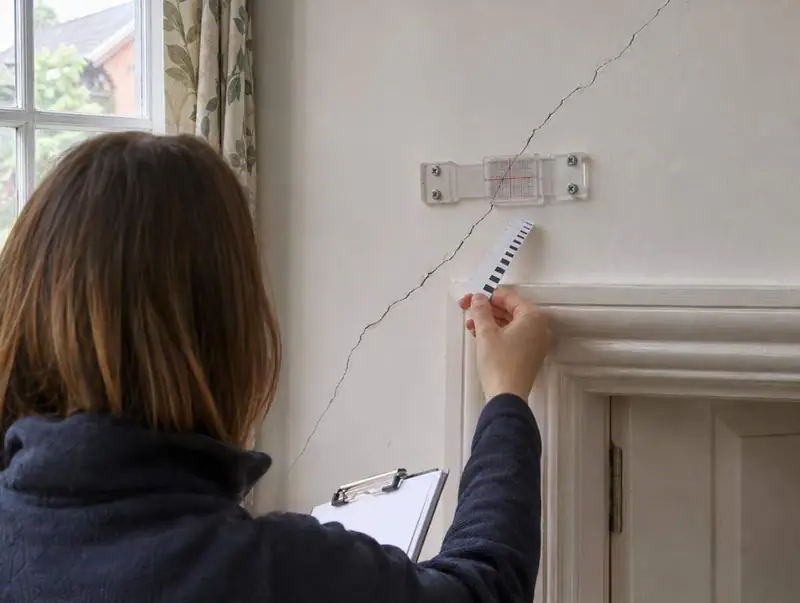
A single visit can show where a building has cracked, but not always whether it is still moving. Monitoring answers that by recording the same points over months, so seasonal clay movement, progressive subsidence and old settled damage can be told apart. The assessment is carried out by an independent chartered structural engineer, whom we can arrange. We are the repair contractor, not the engineer.
The engineer’s report and readings decide what repair is needed, if any. Many cracks turn out to be stable, and the result is simple stitching, repointing and redecoration. When movement continues, the evidence supports a foundation repair or an insurance claim. Once the engineer has specified the repair, we confirm a fixed price in writing and carry out the work.
What are the signs you need structural surveys and crack monitoring?
- A crack you are unsure is old or new
- Cracks that seem wider after a hot, dry summer
- A mortgage valuation recommending a structural engineer’s report
- An insurer or loss adjuster asking for monitoring
- Cracks reopening after being filled and decorated
- Doors and windows sticking at some times of year only
What causes it?
Telling seasonal movement from progressive
Clay soils shrink in summer and swell in winter, so cracks over clay can open and close with the seasons. A survey on one day cannot show that cycle. Readings across summer and winter reveal whether a crack is breathing seasonally or widening steadily year on year.
Confirming a cause has been removed
After a leaking drain is repaired or a tree reduced, monitoring shows whether the house has stabilised. Without it, repairs risk being done too early, and the same cracks can open again within a year. Insurers often require this evidence before agreeing permanent repairs.
Grading the damage
Engineers often classify cracking using BRE Digest 251, which groups damage by typical crack width. Categories 0 to 2 are usually aesthetic, 3 and 4 affect serviceability, and 5 concerns stability. The category is a guide, not a diagnosis, and helps decide how urgent a repair is.
Buying, selling and lending
A valuer who spots cracking may recommend a structural engineer’s report before a lender will proceed. A clear report, sometimes with a short monitoring period, can settle whether the cracking is historic or active, so the sale can go ahead on an informed basis.
How is it repaired?
Engineer’s structural inspection and report
A chartered structural engineer visits, records the cracks, checks the walls, floors, drains and nearby trees, and writes a report on the likely cause and next steps. It may recommend monitoring, investigations such as trial pits, or a repair specification.
Best for: A first expert opinion on any significant cracking
Tell-tales and crack-width monitoring
Gauges are fixed across key cracks and read at set intervals, or reference studs are measured with callipers to a fraction of a millimetre. The readings show whether each crack is widening, closing or stable, and whether any change follows the seasons.
Best for: Tracking individual cracks over the seasons
Level monitoring
Survey points are fixed around the building and their heights measured against a stable datum on each visit. This shows whether one part of the house is dropping or rising compared with the rest, which crack widths alone cannot reveal.
Best for: Suspected subsidence or heave across a whole house
How much will structural surveys and crack monitoring cost?
The cost depends on the engineer’s time, the number of cracks and monitoring points, how many readings are needed and whether level surveys are included. Access and travel distance also play a part.
| Item | Guide price | Per |
|---|---|---|
| Structural engineer's inspection and report | £500 – £2,000 | per property |
| Crack monitoring: installation and three seasonal readings | £1,450 – £2,400 | per programme |
| Extra monitoring visit | £420 | per visit |
See regional prices on the prices page or work out a guide price for your home with the guide price tool.
What happens, step by step?
Free initial assessment
Send photos of the cracks with something for scale and tell us when they appeared. We give a free view on whether an engineer’s inspection is worthwhile, and whether your insurer should be told first.
Engineer’s inspection
We can arrange an independent chartered structural engineer to inspect. They record the damage, assess likely causes and recommend whether monitoring, drain surveys or trial pits are needed before any repair decision.
Install monitoring points
Tell-tales, measuring studs or level points are fixed at the locations the engineer chooses. A base reading is taken on the first visit, so every later reading can be compared against it.
Seasonal readings
Readings are taken at intervals across the seasons, typically including late summer when clay is driest and late winter when it is wettest. The engineer checks each set against the base reading and decides whether more visits are needed.
Repair or close
If the readings show the house is stable, the engineer specifies the repair and we confirm a fixed price in writing. If movement continues, the cause is investigated further before a foundation repair is designed.
How long will structural surveys and crack monitoring take?
An engineer’s inspection usually takes a few hours on site, while crack monitoring normally runs for 6–12 months to cover the seasons.
Do you need building control or a party wall notice?
England and Wales
Surveys and monitoring do not need building control approval. The repair that follows may, and underpinning is building work under Part A that needs approval and inspections; Wales has its own version of the regulations.
Scotland
Inspections and monitoring need no consent. If the engineer specifies structural repairs, a building warrant from the local authority verifier is generally needed before that work starts.
Northern Ireland
Surveys and monitoring need no approval. Any structural repair that follows falls under the Building Regulations (Northern Ireland) 2012 and council building control.
What if you have an insurance claim open?
In a subsidence claim, the insurer usually appoints a loss adjuster and often their own engineer, who arranges monitoring as part of the investigation. Tell your insurer before arranging monitoring or repairs privately, because they may prefer to run it themselves. Monitoring of up to 12 months is common to cover the seasons. Once a repair is agreed, we can price to the loss adjuster’s or engineer’s schedule, but whether a claim is accepted is the insurer’s decision.
Structural surveys and crack monitoring: frequently asked questions
How much does a structural survey cost?
A structural engineer’s inspection and report is a guide £500 to £2,000 inc VAT, depending on the size of the property and the scope. Crack monitoring with installation and three seasonal readings is around £1,450 to £2,400, and an extra visit about £420. Figures vary by region and access and are confirmed in writing first.
What is a tell-tale on a crack?
A tell-tale is a small gauge fixed across a crack, with two overlapping plates marked in millimetres. As the crack opens, closes or shears, the plates move against each other and the reading changes. It gives a simple, repeatable record that anyone can check between visits.
How long does crack monitoring take?
Monitoring normally runs for 6 to 12 months, because readings need to cover both the dry and wet seasons on clay soils. Shorter periods can be enough where the cause is clearly non-seasonal, such as a drain leak that has been repaired. The engineer decides when there is enough evidence.
Who carries out the crack monitoring?
An independent chartered structural engineer designs the monitoring and interprets the readings. We can arrange the engineer for you. We are the repair contractor, so we carry out the repair the engineer specifies once the monitoring has shown what is needed.
What do BRE crack categories mean?
BRE Digest 251 groups damage by typical crack width. Category 0 is under 0.1 mm, 1 up to 1 mm, 2 up to 5 mm, 3 from 5 to 15 mm or several of about 3 mm, 4 from 15 to 25 mm, and 5 usually over 25 mm. It is a guide to severity, not a diagnosis of cause.
When should I get a structural engineer’s report?
It is worth getting one when cracks are wider than a few millimetres, tapered, getting worse, or accompanied by sticking doors and sloping floors. A mortgage valuer or insurer asking for one is another clear trigger. Fine, stable hairline cracks often do not need one.
Can I monitor cracks myself?
You can keep a useful record by photographing cracks with a ruler and pencilling dated marks at their ends. That helps an engineer, but it does not replace measured monitoring, which insurers and lenders usually expect. Do not fill or decorate over cracks while monitoring.
What happens after the monitoring ends?
If the readings show the building is stable, the engineer specifies a repair, usually crack stitching and making good. If movement continues, further investigation and a foundation repair design follow. Either way, we confirm a fixed price in writing once the repair is specified.
Where we carry out structural surveys and crack monitoring
Structural surveys and crack monitoring by area
Choose your area for local ground conditions, regional guide prices and the towns we cover.
England
- Bedfordshire
- Berkshire
- Bristol
- Buckinghamshire
- Cambridgeshire
- Cheshire
- Cornwall
- Cumbria
- Derbyshire
- Devon
- Dorset
- County Durham
- East Riding of Yorkshire
- East Sussex
- Essex
- Gloucestershire
- Greater London
- Greater Manchester
- Hampshire
- Herefordshire
- Hertfordshire
- Isle of Wight
- Kent
- Lancashire
- Leicestershire
- Lincolnshire
- Merseyside
- Norfolk
- North Yorkshire
- Northamptonshire
- Northumberland
- Nottinghamshire
- Oxfordshire
- Rutland
- Shropshire
- Somerset
- South Yorkshire
- Staffordshire
- Suffolk
- Surrey
- Tyne and Wear
- Warwickshire
- West Midlands
- West Sussex
- West Yorkshire
- Wiltshire
- Worcestershire