Dyfed · Wales
Bowing wall repairs in Dyfed
Across Dyfed, requests for bowing wall repairs usually begin with a crack someone has noticed getting wider. Clay shrinkage is less of a concern in Dyfed, so other causes such as drains, poor footings or older walls are checked first. A repair only lasts if the reason for the movement has stopped.
Guide price from£920per wall inc VAT
- Area
- Dyfed
- Pricing region
- Wales
- Ground
- Mostly firmer ground
- Towns listed
- 6
Why does the ground in Dyfed matter for bowing wall repairs?
The western edge of the South Wales coalfield lies beneath Llanelli, Ammanford and parts of Pembrokeshire, while the rest of the area is older hard rock with glacial deposits in the valleys.
Parts of Dyfed lie on a former coalfield, so a coal mining search is worth checking if movement has no obvious cause. Typical buildings in Dyfed: Stone cottages, Victorian terraces in Llanelli and Carmarthen, and post-war estates.
Is it time for bowing wall repairs? Common signs
- Internal plaster cracks where a wall meets the ceiling
- Gutters or the roof edge no longer lining up with the wall
- Window frames pulling away from the brickwork at the sides
- Gaps opening between floorboards and the skirting on an outside wall
What should you budget for bowing wall repairs in Dyfed?
For Dyfed we use Wales rates. Treat the table as a budget guide, inc VAT; the price you pay is the one on your written quote.
| Item | Guide price | Per |
|---|---|---|
| Lateral restraint for a typical gable | £920 – £2,750 | per wall |
| Remedial restraint ties installed | £25 – £55 | per tie |
| Partial rebuild of a badly distorted sectionest. | £2,750 – £7,350 | per section |
Repair options we may recommend
Stitching a delaminating wall
Where the layers of a solid wall have separated, long stainless ties are drilled in from the face and bonded into the inner layer to bind the wall together again. This is often combined with restraint ties, so the wall is both reconnected through its thickness and tied back to the structure.
Best for: Solid walls where the outer layer has pulled away
Restraint ties into the floor
Stainless restraint ties are drilled through the wall and fixed into the floor joists or into blocking between them. Where joists run parallel, noggins are fitted across several joists so the tie has something solid to hold. A neat plate or a buried fixing is left on the outside face.
Best for: Walls bowing at floor level where joists run alongside
Lateral restraint straps
Galvanised or stainless straps are fixed across three or more joists or rafters, turned down against the inside face of the wall and fixed into the masonry. They work well at ceiling and roof level, where the fixings stay hidden.
Best for: Gables and walls bowing near ceiling or roof level
What to expect when we carry out bowing wall repairs
Decide restrain or rebuild
If the wall is badly out of plumb, has bricks crushing or follows removed internal walls, we recommend an engineer, and can arrange one. Their view sets whether restraint is enough or a section needs rebuilding.
Open up inside
Floorboards or a ceiling strip are lifted along the affected wall to expose the joists. We fit noggins where joists run alongside, and plan furniture moves with you, since this is the most disruptive part of the job.
Close up and make good
Boards are relaid, plaster and outside fixings made good, and cracked joints repointed. You receive a record of the restraint positions, which helps if you sell or if an engineer needs to check the wall again later.
Do you need approval for bowing wall repairs in Wales?
In Wales, the Welsh version of the Building Regulations applies. Underpinning and other work that alters or strengthens the structure needs building control approval and inspection; like-for-like repairs often do not. The Party Wall etc. Act 1996 applies to work on party walls and excavation close to a neighbour’s foundations.
Towns in Dyfed we cover for bowing wall repairs
Your bowing wall repairs questions
Is the ground in Dyfed prone to subsidence?
The western edge of the South Wales coalfield lies beneath Llanelli, Ammanford and parts of Pembrokeshire, while the rest of the area is older hard rock with glacial deposits in the valleys. Parts of Dyfed lie on a former coalfield, so a coal mining search is worth checking if movement has no obvious cause. Only an investigation on site can say why a particular building has moved.
How much will bowing wall repairs cost in Dyfed?
On Wales rates, bowing wall repairs starts from about £920 per wall, including VAT. The written price depends on the extent of the damage, access and whether an engineer or building control is needed.
Do restraint ties show on the outside?
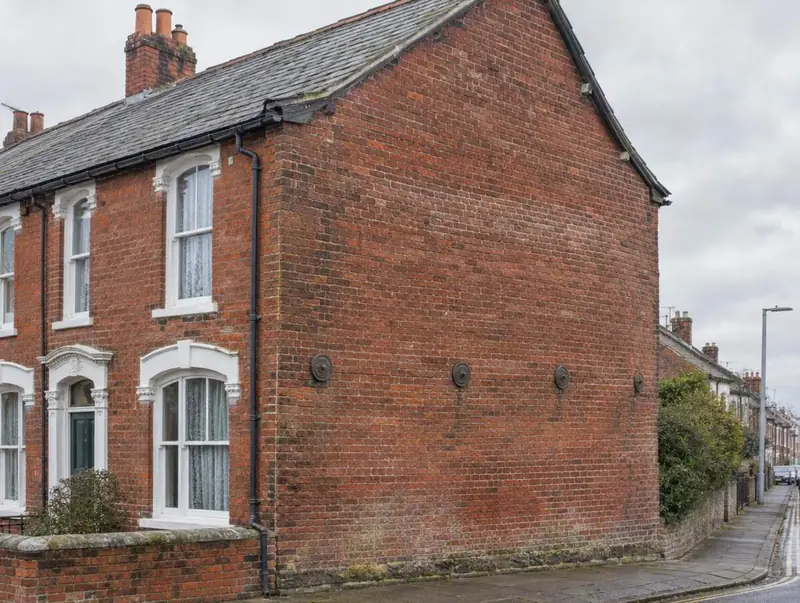
Some do and some do not. Certain ties leave a small round or square plate on the outside face, while others are fully recessed and pointed over. Straps fitted from inside leave no outside trace at all. We agree the finish with you before work starts.
Can a bowing wall be pushed back straight?
Usually not. Masonry rarely returns to plumb without cracking, so the normal aim is to stop further movement and leave the wall where it is. If the bow is too great to accept, that section is rebuilt rather than forced back.
What is lateral restraint?
Lateral restraint is the connection that stops a wall moving sideways, provided by tying it to the floors and roof. Older houses often have little or none, especially where joists run parallel to the wall. Remedial ties and straps add that connection after the event.