Argyll and Bute · Scotland
Bowing wall repairs in Argyll and Bute
If you live in Argyll and Bute and are looking at bowing wall repairs, the first question is why the wall moved. Most of Argyll and Bute is on firmer ground than the clay belts of the south-east; ground movement here is more often linked to soils, drains and trees than to mining.
Guide price from£950per wall inc VAT
- Area
- Argyll and Bute
- Pricing region
- Scotland
- Ground
- Mostly firmer ground
- Towns listed
- 3
Why does the ground in Argyll and Bute matter for bowing wall repairs?
Argyll is hard rock with thin glacial soils and raised beaches along the coast; mainland towns such as Helensburgh and Oban sit on steep coastal slopes.
Ground movement here is more often linked to soils, drains and trees than to mining. What you mostly find across Argyll and Bute: Victorian villas, stone terraces and cottages, and post-war estates.
What to look for before calling about bowing wall repairs
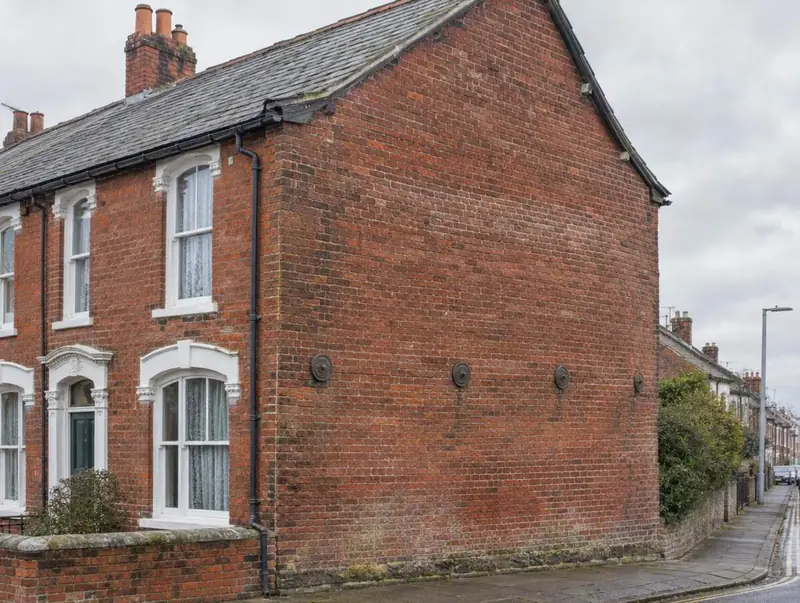
- Window frames pulling away from the brickwork at the sides
- Gutters or the roof edge no longer lining up with the wall
- A visible belly in the wall when you sight along it
- Horizontal cracking at first-floor or ceiling level
Bowing wall repairs prices in Argyll and Bute
These are guide prices for Argyll and Bute, using Scotland rates and including VAT. Your written quote follows photos or a survey, and is fixed once the repair is specified.
| Item | Guide price | Per |
|---|---|---|
| Lateral restraint for a typical gable | £950 – £2,850 | per wall |
| Remedial restraint ties installed | £25 – £55 | per tie |
| Partial rebuild of a badly distorted sectionest. | £2,850 – £7,600 | per section |
How we usually approach bowing wall repairs
Stitching a delaminating wall
Where the layers of a solid wall have separated, long stainless ties are drilled in from the face and bonded into the inner layer to bind the wall together again. This is often combined with restraint ties, so the wall is both reconnected through its thickness and tied back to the structure.
Best for: Solid walls where the outer layer has pulled away
Partial rebuild
A section that has bowed beyond safe limits, or where bricks have crushed, is propped, taken down and rebuilt plumb with restraint built in. It is the most disruptive option, so it is kept to the area that genuinely needs it.
Best for: Badly distorted sections that cannot be tied back
Restraint ties into the floor
Stainless restraint ties are drilled through the wall and fixed into the floor joists or into blocking between them. Where joists run parallel, noggins are fitted across several joists so the tie has something solid to hold. A neat plate or a buried fixing is left on the outside face.
Best for: Walls bowing at floor level where joists run alongside
What happens during bowing wall repairs, step by step?
Decide restrain or rebuild
If the wall is badly out of plumb, has bricks crushing or follows removed internal walls, we recommend an engineer, and can arrange one. Their view sets whether restraint is enough or a section needs rebuilding.
Open up inside
Floorboards or a ceiling strip are lifted along the affected wall to expose the joists. We fit noggins where joists run alongside, and plan furniture moves with you, since this is the most disruptive part of the job.
Fit the ties and straps
Ties are drilled through and fixed, or straps fitted and secured, at the spacing specified. Any rebuild is carried out at this stage, with temporary propping in place until the new brickwork has gained strength.
Do you need approval for bowing wall repairs in Scotland?
In Scotland, underpinning and other structural alterations generally need a building warrant from the council’s building standards service before work starts, and a completion certificate at the end; small like-for-like repairs often do not. There is no Party Wall Act in Scotland; shared walls are covered by title deeds and, for flats, the Tenements (Scotland) Act 2004.
Survey visits in parts of Argyll and Bute are by arrangement because of travel and access. We can still give a free initial view from photos, and we tell you any travel cost before a visit is booked.
Find bowing wall repairs in your Argyll and Bute town
Questions about bowing wall repairs in Argyll and Bute
Why do houses in Argyll and Bute crack?
Argyll is hard rock with thin glacial soils and raised beaches along the coast; mainland towns such as Helensburgh and Oban sit on steep coastal slopes. Ground movement here is more often linked to soils, drains and trees than to mining. Only an investigation on site can say why a particular building has moved.
How much will bowing wall repairs cost in Argyll and Bute?
On Scotland rates, bowing wall repairs starts from about £950 per wall, including VAT. The written price depends on the extent of the damage, access and whether an engineer or building control is needed.
Does a bowing wall need an engineer?
Often it does, especially if the bow is large, growing or linked to removed internal walls or chimney breasts. Small, long-standing bows can sometimes be restrained to a standard detail. Where the repair needs an engineer’s design or sign-off, we can arrange an independent chartered structural engineer.
Is a bowing wall dangerous?
A bowing wall is not always dangerous, but it should never be ignored. Many have been slightly out of line for decades. A bow that is growing, crushing bricks or appeared after building work is more serious, and an engineer should look at it promptly. Your engineer will confirm.
Can a bowing wall be pushed back straight?
Usually not. Masonry rarely returns to plumb without cracking, so the normal aim is to stop further movement and leave the wall where it is. If the bow is too great to accept, that section is rebuilt rather than forced back.