Herefordshire · England
Bowing wall repairs in Herefordshire
Herefordshire has its own mix of ground and building types, and that shapes how bowing wall repairs is done here. Clay soils are found in parts of Herefordshire.
Guide price from£1,000per wall inc VAT
- Area
- Herefordshire
- Pricing region
- West Midlands
- Ground
- Clay in parts
- Towns listed
- 3
How do local ground conditions affect bowing wall repairs in Herefordshire?
Herefordshire is largely Old Red Sandstone marls that weather to clayey soils, with river alluvium along the Wye. Timber-framed and solid-walled older buildings are common.
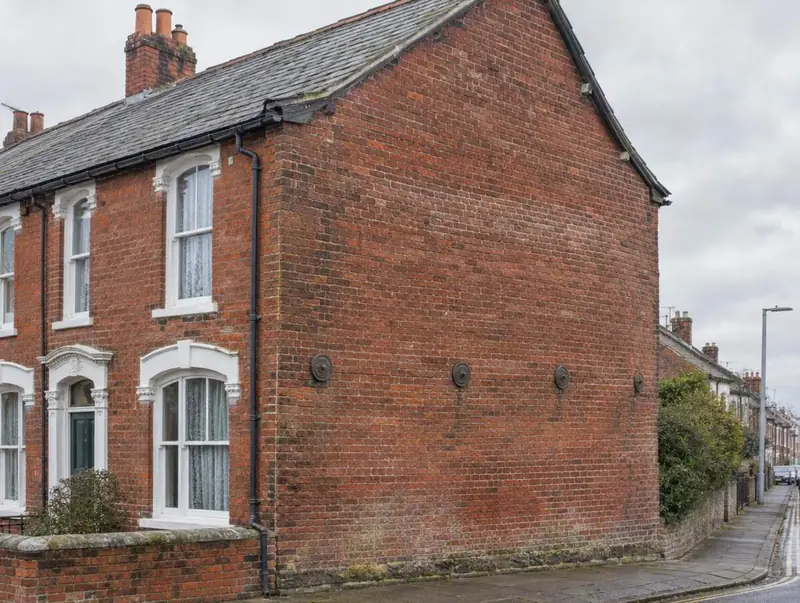
Ground movement here is more often linked to soils, drains and trees than to mining. What you mostly find across Herefordshire: black-and-white timber-framed houses, stone farmhouses, Victorian terraces in Hereford and post-war estates.
Symptoms that point to bowing wall repairs
- Gaps opening between floorboards and the skirting on an outside wall
- Internal plaster cracks where a wall meets the ceiling
- Horizontal cracking at first-floor or ceiling level
- Gutters or the roof edge no longer lining up with the wall
Guide prices for bowing wall repairs in Herefordshire
For Herefordshire we use West Midlands rates. Treat the table as a budget guide, inc VAT; the price you pay is the one on your written quote.
| Item | Guide price | Per |
|---|---|---|
| Lateral restraint for a typical gable | £1,000 – £3,000 | per wall |
| Remedial restraint ties installed | £25 – £60 | per tie |
| Partial rebuild of a badly distorted sectionest. | £3,000 – £8,000 | per section |
Methods for bowing wall repairs
Lateral restraint straps
Galvanised or stainless straps are fixed across three or more joists or rafters, turned down against the inside face of the wall and fixed into the masonry. They work well at ceiling and roof level, where the fixings stay hidden.
Best for: Gables and walls bowing near ceiling or roof level
Partial rebuild
A section that has bowed beyond safe limits, or where bricks have crushed, is propped, taken down and rebuilt plumb with restraint built in. It is the most disruptive option, so it is kept to the area that genuinely needs it.
Best for: Badly distorted sections that cannot be tied back
Stitching a delaminating wall
Where the layers of a solid wall have separated, long stainless ties are drilled in from the face and bonded into the inner layer to bind the wall together again. This is often combined with restraint ties, so the wall is both reconnected through its thickness and tied back to the structure.
Best for: Solid walls where the outer layer has pulled away
From first photo to finished repair
Assess the bow
We look at where the wall bows, how far it is out of plumb and how the floors and roof meet it. Photographs from your phone held flat against the wall often show the shape clearly before anyone visits.
Decide restrain or rebuild
If the wall is badly out of plumb, has bricks crushing or follows removed internal walls, we recommend an engineer, and can arrange one. Their view sets whether restraint is enough or a section needs rebuilding.
Close up and make good
Boards are relaid, plaster and outside fixings made good, and cracked joints repointed. You receive a record of the restraint positions, which helps if you sell or if an engineer needs to check the wall again later.
Do you need approval for bowing wall repairs in England?
In England, underpinning and other work that alters or strengthens a wall or foundation is building work under the Building Regulations (Part A, structure), so building control approves and inspects it. Like-for-like repairs often are not, and we tell you which applies before a price is agreed. Work to a party wall, or excavation close to a neighbour’s foundations, can also need a notice under the Party Wall etc. Act 1996.
Bowing wall repairs near you in Herefordshire
Frequently asked questions
Does the ground around Hereford cause cracking?
Herefordshire is largely Old Red Sandstone marls that weather to clayey soils, with river alluvium along the Wye. Timber-framed and solid-walled older buildings are common. Ground movement here is more often linked to soils, drains and trees than to mining. Only an investigation on site can say why a particular building has moved.
How much will bowing wall repairs cost in Herefordshire?
On West Midlands rates, bowing wall repairs starts from about £1,000 per wall, including VAT. The written price depends on the extent of the damage, access and whether an engineer or building control is needed.
Can a bowing wall be pushed back straight?
Usually not. Masonry rarely returns to plumb without cracking, so the normal aim is to stop further movement and leave the wall where it is. If the bow is too great to accept, that section is rebuilt rather than forced back.
Is a bowing wall dangerous?
A bowing wall is not always dangerous, but it should never be ignored. Many have been slightly out of line for decades. A bow that is growing, crushing bricks or appeared after building work is more serious, and an engineer should look at it promptly. Your engineer will confirm.
Does a bowing wall need an engineer?
Often it does, especially if the bow is large, growing or linked to removed internal walls or chimney breasts. Small, long-standing bows can sometimes be restrained to a standard detail. Where the repair needs an engineer’s design or sign-off, we can arrange an independent chartered structural engineer.