Surveys and insurance claims
Subsidence insurance claim repairs
A subsidence insurance claim is a request to your buildings insurer to pay for investigating and repairing damage caused by ground movement under the home. Repairs are normally carried out to a schedule of work agreed through the insurer’s loss adjuster and engineer.
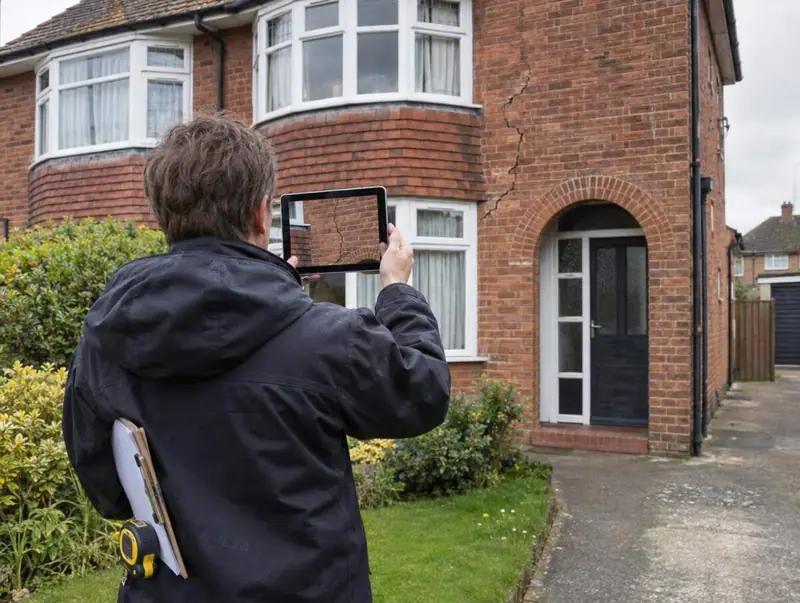
Most buildings policies cover subsidence, heave and landslip, subject to their terms and a subsidence excess that is commonly about £1,000. A claim is not a quick fix. The insurer usually appoints a loss adjuster, investigates drains and trees, and may monitor the house for up to a year before agreeing a repair. Most subsidence claims are settled without underpinning.
This is the insurance-work route. We can price to your loss adjuster’s or engineer’s schedule and carry out the repairs once the work is agreed. Anything you want beyond the claim, known as betterment, is priced separately. We cannot promise that a claim will be accepted, and we do not decide what an insurer pays. Tell your insurer before permanent repairs start.
What are the signs you need subsidence insurance claim repairs?
- New cracks you think may be caused by ground movement
- A letter from a loss adjuster asking for access
- An engineer’s report saying the cracking is subsidence-related
- Monitoring has finished and a repair scope has been issued
- You have been asked to find your own contractor for the repair
- You want extra work done while claim repairs are under way
What causes it?
Why insurers investigate first
An insurer needs to know the cause before paying for a repair, because a repair over an active cause fails. That is why drains are surveyed, trees are identified and sometimes soil is tested before any work is agreed. The investigation can feel slow, but it shapes the whole claim.
Mitigation before repair
Removing the cause is usually the first agreed step. That might mean repairing a leaking drain, reducing or removing vegetation, or asking a neighbour or council about a tree on their land. Only once the cause is dealt with, and the house is shown to be stable, do permanent repairs follow.
Monitoring to prove stability
On clay, an adjuster may ask for crack or level monitoring for up to 12 months to cover a dry summer and a wet winter. The readings show whether mitigation has worked or whether a foundation repair is needed. Decorating over cracks during this time can hide useful evidence.
What may not be covered
Policies usually exclude some things, such as damage to boundary walls and patios unless the house is also affected, settlement of new buildings, and damage that began before the policy started. The excess applies to each claim. Your policy wording and the adjuster will set out what is covered.
How is it repaired?
Pricing the adjuster’s or engineer’s schedule
When the claim reaches the repair stage, we price the schedule of work line by line, at no charge to request. You or the adjuster can compare it against other prices. The figures follow the agreed scope, so nothing is quietly added or left out.
Best for: Homeowners asked to obtain quotes for an agreed scope
Carrying out the agreed repairs
Once the scope is agreed and you instruct us, we carry out the repair, which is often crack stitching, repointing, replastering and redecoration, and sometimes drain or foundation work. We deal with building control where the work needs it and keep the adjuster informed.
Best for: Claims where the repair scope has been settled
Betterment priced separately
Many homeowners take the chance to do extra work while trades are on site, such as redecorating whole rooms or upgrading finishes. That betterment sits outside the claim, so we price it as a separate written quote, keeping the claim work clear.
Best for: Extra work you choose beyond the agreed claim repair
How much will subsidence insurance claim repairs cost?
Claim repair prices follow the agreed schedule, so the scope, the access and the extent of internal making good set the figure. Your excess is set by your policy, and any betterment is quoted on its own.
| Item | Guide price | Per |
|---|---|---|
| Your policy excess for subsidence (check your schedule) | £1,000 | commonly |
| Pricing a loss adjuster's or engineer's repair scheduleest. | Free to request | — |
| Repairs outside the claim (betterment, decoration upgrades)est. | Priced separately | — |
See regional prices on the prices page or work out a guide price for your home with the guide price tool.
What happens, step by step?
Notify your insurer
Report suspected subsidence to your buildings insurer as soon as you notice it, with dated photos. Do not start permanent repairs first. Check your schedule for the subsidence excess, which is commonly about £1,000.
Loss adjuster and engineer
The insurer usually appoints a loss adjuster, who visits and may bring in an engineer. They record the damage, ask about its history and arrange investigations such as a CCTV drain survey, trial pits and a tree survey.
Mitigation and monitoring
The identified cause is dealt with, perhaps a drain repair or tree work, and the house may be monitored for several months, sometimes up to 12, to confirm it has stabilised before repairs are agreed.
Schedule of repairs
The adjuster or engineer issues a schedule of the work needed. We can price to your loss adjuster’s or engineer’s schedule, and confirm a fixed price in writing, with any betterment shown as a separate quote.
Repairs and sign-off
With the scope agreed, we carry out the repairs, deal with building control where required and make good. Keep the paperwork, which helps with future insurance and if you sell the house.
How long will subsidence insurance claim repairs take?
A subsidence claim often takes many months from first report to completed repairs, mostly in investigation and monitoring, while the repairs themselves are usually a few days to a few weeks.
Do you need building control or a party wall notice?
England and Wales
The claim itself needs no approval, but repair work such as underpinning is building work under Part A and needs building control approval; Wales has its own version of the regulations. If claim repairs involve a shared wall, the Party Wall etc. Act 1996 can require notice to the neighbour.
Scotland
Claim repairs that alter or strengthen the structure, such as underpinning, generally need a building warrant from the local authority verifier before they start and a completion certificate afterwards; like-for-like repairs often do not. Scotland has no Party Wall Act, so repairs to a shared or tenement wall depend on common law, title deeds and any tenement rules.
Northern Ireland
Claim repairs to the structure fall under the Building Regulations (Northern Ireland) 2012 and council building control. There is no Party Wall Act, so agree access with neighbours.
What if you have an insurance claim open?
The insurer decides whether a subsidence claim is covered, based on the investigation and your policy wording. A loss adjuster represents the insurer, not you, though they should explain each step. You can appoint your own loss assessor or a surveyor to act for you if you prefer. We price and carry out the repair. Whether a claim is accepted, and how much it pays, is for your insurer to decide, so we never promise either.
Subsidence insurance claim repairs: frequently asked questions
How much is the excess on a subsidence claim?
The subsidence excess is commonly about £1,000, though it varies and is often higher than for other claims. Check your policy schedule for the exact figure. It is usually paid once per claim and deducted from the settlement or paid to the contractor.
How do I make a subsidence claim?
Contact your buildings insurer as soon as you suspect subsidence, with dated photos and a note of when the cracks appeared. They will usually appoint a loss adjuster to visit. Do not start permanent repairs before the insurer has seen the damage.
How long does a subsidence claim take?
Many claims take several months to over a year, mostly because of investigations and monitoring. On clay, insurers often want readings across a summer and winter before agreeing a repair. The repairs themselves are usually much quicker once the scope is settled.
Will the insurer pay for underpinning?
Only if investigations show it is needed, which is less common than many people expect. Most subsidence claims are fixed by dealing with the cause, such as a drain or tree, and then repairing the cracks. The insurer’s engineer recommends the method.
Can I choose my own contractor for claim repairs?
Sometimes, depending on your insurer. Some appoint their own contractors, while others let you obtain quotes to the agreed schedule. Ask your loss adjuster. If you are allowed to choose, we can price to the schedule at no charge.
What is betterment in a subsidence claim?
Betterment is any improvement beyond restoring the home to its condition before the damage, such as upgrading finishes or redecorating extra rooms. The insurer does not normally pay for it. We price betterment as a separate written quote, so it is clearly kept outside the claim.
What if my subsidence claim is declined?
Ask the insurer for the reasons in writing and check them against your policy wording. You can complain to the insurer and then, if unresolved, go to the Financial Ombudsman Service. If you decide to repair privately, we can give a no-obligation written quote.
Should I repair cracks before claiming?
No, tell your insurer before permanent repairs start. Early repairs can hide evidence the adjuster needs and may affect your claim. Take dated photos, and if a crack is letting in water, ask the insurer about a temporary weatherproofing measure.
Where we carry out subsidence insurance claim repairs
Subsidence insurance claim repairs by area
Choose your area for local ground conditions, regional guide prices and the towns we cover.
England
- Bedfordshire
- Berkshire
- Bristol
- Buckinghamshire
- Cambridgeshire
- Cheshire
- Cornwall
- Cumbria
- Derbyshire
- Devon
- Dorset
- County Durham
- East Riding of Yorkshire
- East Sussex
- Essex
- Gloucestershire
- Greater London
- Greater Manchester
- Hampshire
- Herefordshire
- Hertfordshire
- Isle of Wight
- Kent
- Lancashire
- Leicestershire
- Lincolnshire
- Merseyside
- Norfolk
- North Yorkshire
- Northamptonshire
- Northumberland
- Nottinghamshire
- Oxfordshire
- Rutland
- Shropshire
- Somerset
- South Yorkshire
- Staffordshire
- Suffolk
- Surrey
- Tyne and Wear
- Warwickshire
- West Midlands
- West Sussex
- West Yorkshire
- Wiltshire
- Worcestershire