Ground and foundations
Resin injection ground stabilisation
Resin injection ground stabilisation is a method of strengthening the soil under an existing foundation by injecting an expanding resin through small holes. The resin fills voids and compacts loose ground, and can sometimes lift a settled section back towards level.
Guide price from£800per metre of wall treated inc VAT
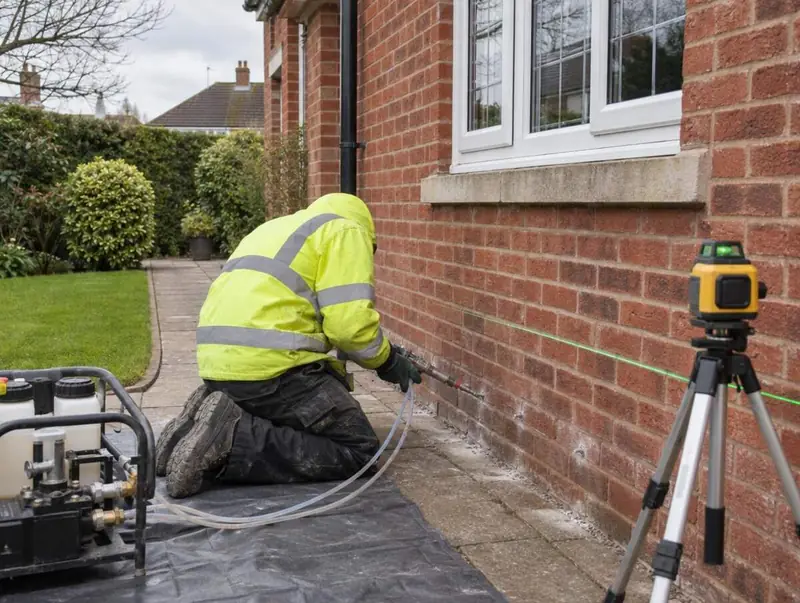
Resin injection is an alternative to traditional underpinning for some, not all, foundation problems. Small tubes are inserted through holes about the size of a coin, and a two-part resin is pumped into the ground below the footing, where it expands and hardens. Laser levels are watched throughout so the injection stops before the structure is pushed out of line.
The appeal is speed and tidiness: no trenches along the wall, little spoil, and often no need to move out. The limits matter as much. It cannot fix a leaking drain, stop a thirsty tree or reach very deep soft ground. Where an engineer’s design or sign-off is needed, an independent chartered structural engineer is appointed, and we can arrange this.
What are the signs you need resin injection ground stabilisation?
- Floor slab dropping or hollow-sounding near one external wall
- Settlement after a drain leak has been found and repaired
- Cracks over a section of wall built on loose fill
- A corner that has dropped but no longer moves with the seasons
- Gaps opening beneath a ground-floor slab or path
- Sinking that trial pits trace to loose or washed-out soil
What causes it?
Voids left by leaking drains
Water escaping from a broken drain can carry fine particles away and leave pockets under the footing. Once the drain has been repaired, resin can fill those pockets and bind the loosened soil, which is one of the situations where the method tends to work best.
Loose or poorly compacted fill
Houses and extensions built on backfill that was never properly compacted can keep settling for years. Injected resin densifies that upper layer and raises its bearing strength, provided firm ground is not far below and the fill is not mostly organic material.
Settlement of ground-floor slabs
Concrete floor slabs laid on hardcore can drop as the fill beneath consolidates, leaving gaps under skirting boards and cracked tiles. Resin injected under the slab can fill the voids and sometimes lift it back towards level without breaking the floor out.
Where resin is usually not the answer
Active clay shrinkage driven by nearby trees, very deep soft ground, peat, large mine voids and fast-flowing groundwater are poor candidates. In those cases the cause keeps working below the treated zone, and underpinning, mini-piles or specialist grouting are more likely to last. Your engineer will confirm.
How is it repaired?
Injection beneath strip footings
Holes are drilled at close spacing along the wall, and tubes are placed at one or more depths below the footing. Resin is injected in stages from the bottom up, building a stiffened zone of ground under the wall while levels are read continuously.
Best for: Settled walls on loose or washed-out soil at shallow depth
Slab void filling and lifting
Small holes are drilled through the floor, and resin is fed into the void between the slab and the fill. As it expands it fills the gap and can lift the slab by small, controlled amounts. Floor coverings are lifted locally and the holes filled afterwards.
Best for: Sunken concrete ground floors and garage slabs
Resin alongside other repairs
Injection often forms one part of a wider scheme: drains repaired first, resin under the affected section, then crack stitching and making good once readings settle. On a mixed site, one wall may suit resin while another needs conventional underpinning instead.
Best for: Localised settlement within a broader subsidence repair
How much will resin injection ground stabilisation cost?
The treated length and depth set most of the cost, along with the amount of resin the ground takes, which is never fully known until injection starts. Drain repairs, access, monitoring and making good are priced as separate items.
| Item | Guide price | Per |
|---|---|---|
| Resin injection ground stabilisation | £800 – £1,500 | per metre of wall treated |
| Typical domestic project | £5,000 – £15,000 | per project |
| Level monitoring after treatmentest. | £350 – £900 | per programme |
See regional prices on the prices page or work out a guide price for your home with the guide price tool.
What happens, step by step?
Is resin suitable?
Send photos and any reports you hold. We give a free initial assessment, and an independent engineer then checks soil type, depth to firm ground and the cause. We can arrange the engineer. Clay and tree problems need particular care.
Ground and drain checks
Trial pits or probes confirm the soil profile, and a CCTV drain survey checks for leaks and for pipes in the injection zone. Damaged drains are repaired first, so resin is not lost into them or used to treat a cause that is still active.
Design and written price
The injection depths, spacing and target lift are set out before work starts. We confirm a fixed price in writing for the treated length, the monitoring and the making good, and deal with building control where the work needs it.
Injection day
Holes are drilled, tubes placed and resin injected in stages while laser levels on the wall are watched for any rise. Most domestic jobs are done from outside, with little mess. Holes are filled and joints made good at the end.
Level monitoring
Readings after treatment show whether the ground is holding. Once they are steady, cracks are stitched and redecoration can follow. If a section keeps moving, the engineer decides whether further injection or a different method is needed.
How long will resin injection ground stabilisation take?
Resin injection usually takes 1–2 days on site for a domestic project, followed by a period of level monitoring.
Do you need building control or a party wall notice?
England and Wales
Building control often expects an application under Part A for resin injection beneath foundations, as it would for underpinning, so check before work starts; Wales has its own version of the regulations. Treating ground under a party wall may need notice under the Party Wall etc. Act 1996, and a party wall surveyor can confirm.
Scotland
Structural ground treatment generally needs a building warrant from the local authority verifier, and the verifier can confirm what they need for a particular scheme. There is no Party Wall Act, so check your title deeds and speak to neighbours before treating ground under a shared wall.
Northern Ireland
Ground stabilisation under foundations falls within the Building Regulations (Northern Ireland) 2012, checked by council building control. There is no Party Wall Act, so agree any work under a shared wall with the neighbour.
What if you have an insurance claim open?
If resin injection is offered as part of a subsidence claim, the loss adjuster and their engineer normally decide the method and its extent. Tell your insurer before permanent repairs start, including any injection you arrange privately, because work done early can affect a claim. We can price to the loss adjuster’s or engineer’s schedule and carry out the injection and making good. Whether the insurer pays is their decision under your policy.
Resin injection ground stabilisation: frequently asked questions
How much does resin injection cost?
Resin injection is a guide £800 to £1,500 per metre of wall treated inc VAT, and a typical domestic project falls between £5,000 and £15,000. Level monitoring afterwards is around £350 to £900 per programme. Figures vary by region and access and are confirmed in writing after a survey.
Is resin injection better than underpinning?
It is better for some jobs and unsuitable for others. Resin is quicker and less disruptive where the problem is loose or washed-out soil close to the footing. Underpinning or mini-piles are usually the safer choice for deep soft ground or clay dried by trees that cannot be removed.
Does resin injection work on clay soil?
Sometimes, but clay needs the most caution. If seasonal shrinkage from nearby trees is the cause, resin under the footing may not stop the drying below it. An engineer should look at the soil, the trees and the monitoring history before resin is chosen for a clay site.
Can resin injection lift my house back to level?
It can produce small, controlled lifts, but it is not a way to jack a house back to its original position. The main aim is to stabilise the ground. Laser levels are watched throughout so injection stops before the lift strains the walls or opens new cracks.
Will I need to move out?
Usually not, because most domestic injection is done from outside along the wall over one or two days. Slab treatments mean working inside, so furniture and floor coverings are moved locally. There is drilling noise, but very little dust or spoil compared with digging.
How long does resin injection last?
The cured resin itself is stable and does not break down in normal ground. Whether the repair lasts depends on whether the cause of movement has been removed, which is why drains are checked and monitoring follows. If the ground was the only problem, the treatment is usually long-term.
Is the resin harmful to the ground or drains?
Once cured, the resin is inert in the ground. The practical risk is resin travelling into a damaged drain or service duct, which is why a CCTV drain survey comes first and any defects are repaired before injection. Services near the treated zone are located and protected.
How do I know if my house is suitable?
An engineer decides, based on the soil type, the depth to firm ground and the cause of movement. Send us photos and any reports for a free initial assessment. We will say honestly if resin looks unlikely to suit and a different repair is worth considering.
Where we carry out resin injection ground stabilisation
Resin injection ground stabilisation by area
Choose your area for local ground conditions, regional guide prices and the towns we cover.
England
- Bedfordshire
- Berkshire
- Bristol
- Buckinghamshire
- Cambridgeshire
- Cheshire
- Cornwall
- Cumbria
- Derbyshire
- Devon
- Dorset
- County Durham
- East Riding of Yorkshire
- East Sussex
- Essex
- Gloucestershire
- Greater London
- Greater Manchester
- Hampshire
- Herefordshire
- Hertfordshire
- Isle of Wight
- Kent
- Lancashire
- Leicestershire
- Lincolnshire
- Merseyside
- Norfolk
- North Yorkshire
- Northamptonshire
- Northumberland
- Nottinghamshire
- Oxfordshire
- Rutland
- Shropshire
- Somerset
- South Yorkshire
- Staffordshire
- Suffolk
- Surrey
- Tyne and Wear
- Warwickshire
- West Midlands
- West Sussex
- West Yorkshire
- Wiltshire
- Worcestershire