Ground and foundations
Subsidence repairs
Subsidence repair means stopping a building’s foundations from sinking further and then repairing the damage. In most homes the cause, often a leaking drain or a thirsty tree, is dealt with first and the walls are repaired once the ground is stable.
Guide price from£2,500per property inc VAT
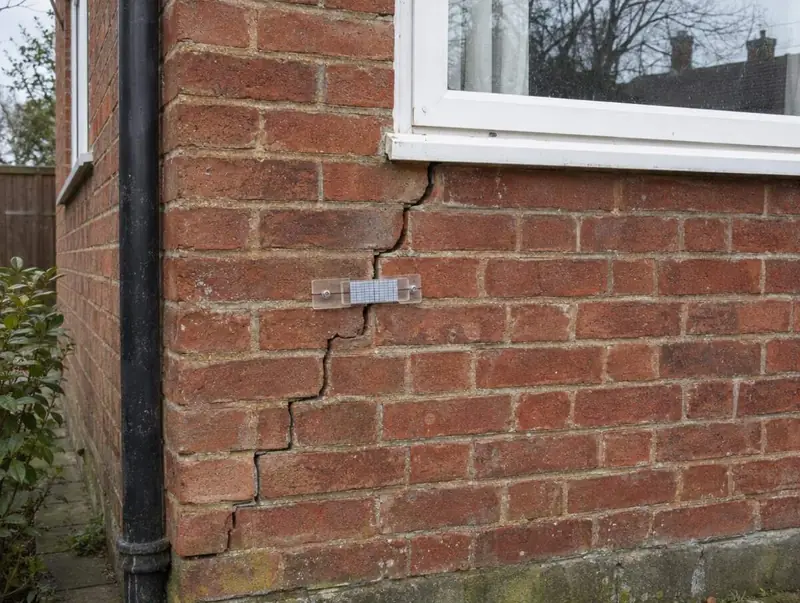
Subsidence happens when the ground under a foundation shrinks, softens or washes away, so one part of the house drops more than the rest. The cracks are usually tapered, wider at one end, and often start at the corners of doors and windows. Most subsidence is not fixed with underpinning. Once the cause is removed, many houses settle and need only crack repairs.
We repair existing homes after subsidence, from stitched cracks to foundation work. Start with a free initial assessment from your photos or a call, then a no-obligation written quote. Where the cause or the repair needs an engineer’s judgement, an independent chartered structural engineer is appointed, and we can arrange this. If you hold buildings insurance, tell your insurer before permanent repairs start.
What are the signs you need subsidence repairs?
- Diagonal cracks wider at the top, running from window or door corners
- Doors and windows that start to stick or no longer close
- Cracks that open in summer and partly close again in winter
- Wallpaper rippling or tearing where the wall meets the ceiling
- A gap opening between the skirting board and the floor
- Fresh cracks showing on both the inside and outside of one wall
What causes it?
Clay shrinkage in dry weather
Shrinkable clays lose volume as they dry. London Clay, across London and the South East, is the most susceptible, and Oxford Clay, Gault Clay and Mercia Mudstone lie under many other towns. Movement is usually worst in late summer after a dry spell.
Tree and shrub roots
Trees pull water out of clay, so a tree or hedge close to the house can dry the ground beneath shallow footings. Felling it is rarely the simple answer. Removing a mature tree on clay can cause heave as the ground swells back, so take advice first.
Leaking or broken drains
A cracked drain lets water soak into the ground beside the foundation. On clay it softens the soil, and on sandy ground it can wash fine particles away and leave voids. A CCTV drain survey is a common first check, and a drain repair often stops the movement.
Soft or poorly compacted ground
Some houses sit on made ground, backfilled pits or peat that compresses slowly under load. Here the movement may not follow the seasons at all, and an engineer will usually want trial pits and a period of monitoring before deciding on a repair.
How is it repaired?
Remove the cause, then repair
Most subsidence is dealt with this way. The drain is repaired or the vegetation managed, the house is watched to confirm it has stabilised, and then the cracks are stitched, repointed and made good inside. It is the least disruptive route and usually the cheapest.
Best for: Clay movement or drain leaks where the cause can be removed
Crack stitching and making good
Once movement has stopped, cracked brickwork is cut along the bed joints, stainless helical bars are bonded in to tie the wall together, and the joints are repointed to match. Inside, plaster is renewed along the crack line before redecoration.
Best for: Category 1 to 3 cracking in walls that are otherwise sound
Foundation strengthening
Where the ground cannot be made stable, the load is carried down to firmer soil by underpinning, a beam-and-base scheme, mini-piles or resin injection, depending on the soil and access. It is designed by an engineer and is the exception, not the rule.
Best for: Ongoing movement where removing the cause has not worked
How much will subsidence repairs cost?
The price depends mostly on the cause and how much damage the movement left: a drain repair and a few stitched cracks cost far less than a foundation scheme. Access, scaffolding, rooms needing making good and your region all affect the figure.
| Item | Guide price | Per |
|---|---|---|
| Structural engineer's investigation and report | £500 – £2,000 | per property |
| CCTV drain survey (common first check) | £150 – £350 | per survey |
| Typical repair once the cause is dealt with: crack stitching and making goodest. | £2,500 – £12,000 | per property |
| Foundation strengthening where it is needed (see underpinning) | £1,000 – £3,500 | per metre of wall |
See regional prices on the prices page or work out a guide price for your home with the guide price tool.
What happens, step by step?
Send photos or call
Send photos of the cracks with a coin or tape for scale, and say when you first noticed them. We give a free initial assessment and suggest whether an engineer, a drain survey or your insurer comes first.
Find the cause
An independent chartered structural engineer inspects the house and, where needed, arranges a drain survey, trial pits or soil tests. We can arrange the engineer. The aim is to know what is moving, and why, before money goes on repairs.
Deal with the cause
Drains are repaired, vegetation is managed on the engineer’s advice, or a foundation scheme is designed if nothing else will work. Where monitoring is recommended, readings run for several months to show the movement has stopped.
Written quote
We price the agreed repair and confirm a fixed price in writing once it is specified. If there is an insurance claim, we can price to the loss adjuster’s or engineer’s schedule instead of our own scope.
Repairs and making good
Cracks are stitched and repointed outside, plaster is renewed along the crack lines inside, and sticking doors are eased. Where the work needs it, we deal with building control and hand over the paperwork.
How long will subsidence repairs take?
Crack repairs after subsidence usually take 1–3 days on site, though confirming the movement has stopped can take 6–12 months beforehand.
Do you need building control or a party wall notice?
England and Wales
Crack repairs rarely need building control, but underpinning is building work under Part A of the Building Regulations (Wales has its own version) and needs approval and inspections. Work to a party wall may need notice under the Party Wall etc. Act 1996.
Scotland
Structural foundation work generally needs a building warrant from the local authority verifier before it starts, and a completion certificate afterwards. There is no Party Wall Act, so shared walls follow common law and your title deeds.
Northern Ireland
Foundation work falls under the Building Regulations (Northern Ireland) 2012 and is checked by council building control. There is no Party Wall Act, so agree work on a shared wall with your neighbour first.
What if you have an insurance claim open?
Most buildings policies cover subsidence, subject to their terms and a subsidence excess. Tell your insurer before permanent repairs start. They normally appoint a loss adjuster, investigate drains and trees, and may ask for monitoring before agreeing a repair. We can price to your loss adjuster’s or engineer’s schedule and carry out the work, but whether a claim is accepted is for your insurer to decide.
Subsidence repairs: frequently asked questions
How much do subsidence repairs cost?
A typical repair once the cause is dealt with, covering crack stitching and making good, is a guide £2,500 to £12,000 inc VAT. An engineer’s investigation is usually £500 to £2,000 and a CCTV drain survey £150 to £350. Foundation strengthening, where needed, is £1,000 to £3,500 per metre of wall. Prices vary by region and access and are confirmed in writing after a survey.
How do I know if cracks are subsidence?
Subsidence cracks are usually tapered, run diagonally from door and window corners, and show on both faces of the wall. Fine vertical cracks in new plaster are more often shrinkage. An engineer’s inspection, sometimes with monitoring, is the reliable way to tell.
Does subsidence always need underpinning?
No, most subsidence is repaired without underpinning. When a leaking drain is fixed or nearby vegetation is managed, the ground usually stabilises and the house needs only crack repairs. Foundation work is kept for movement that continues after the cause has gone.
Should I cut down the tree near my house?
Not without advice, because felling a mature tree on clay can make things worse. As the roots stop drawing water, the clay swells and can lift the foundations, which is called heave. Pruning or staged removal may be advised instead. Check whether the tree is protected.
Can I sell a house that has had subsidence?
Yes, though buyers and lenders will want paperwork. Keep the engineer’s report, monitoring results, the repair specification and any building control sign-off. A repaired house shown to be stable is far easier to sell than one with an open problem.
How long should I wait before repairing subsidence cracks?
Usually until the cause has been dealt with and the engineer is satisfied that movement has stopped. On clay that can mean watching the house through a summer and a winter. Repairing too early risks the same cracks opening again.
Will past subsidence affect my home insurance?
It can, because insurers ask about previous subsidence at renewal or when you switch. Staying with the insurer who handled a claim is often simplest. Answer any new insurer’s questions honestly and keep the repair records, which show the problem was dealt with.
Do you need to visit before giving a price?
Not at first. We give a free initial assessment from your photos or a call, and a no-obligation written quote once the scope is clear. A fixed price follows in writing once the repair is specified, which normally needs a survey.
Where we carry out subsidence repairs
Subsidence repairs by area
Choose your area for local ground conditions, regional guide prices and the towns we cover.
England
- Bedfordshire
- Berkshire
- Bristol
- Buckinghamshire
- Cambridgeshire
- Cheshire
- Cornwall
- Cumbria
- Derbyshire
- Devon
- Dorset
- County Durham
- East Riding of Yorkshire
- East Sussex
- Essex
- Gloucestershire
- Greater London
- Greater Manchester
- Hampshire
- Herefordshire
- Hertfordshire
- Isle of Wight
- Kent
- Lancashire
- Leicestershire
- Lincolnshire
- Merseyside
- Norfolk
- North Yorkshire
- Northamptonshire
- Northumberland
- Nottinghamshire
- Oxfordshire
- Rutland
- Shropshire
- Somerset
- South Yorkshire
- Staffordshire
- Suffolk
- Surrey
- Tyne and Wear
- Warwickshire
- West Midlands
- West Sussex
- West Yorkshire
- Wiltshire
- Worcestershire