Hampshire · England
Subsidence repairs in Hampshire
Hampshire has its own mix of ground and building types, and that shapes how subsidence repairs is done here. Shrinkable clay is widespread in Hampshire.
Guide price from£2,800per property inc VAT
- Area
- Hampshire
- Pricing region
- South East
- Ground
- Shrinkable clay widespread
- Towns listed
- 22
How do local ground conditions affect subsidence repairs in Hampshire?
Central Hampshire is chalk, while the south around Portsmouth, Southampton and the New Forest fringe and the north-east around Farnborough sit on London Clay, Reading Beds and other clays and sands. The clay areas see seasonal movement near trees.
Ground movement here is more often linked to soils, drains and trees than to mining. What you mostly find across Hampshire: Victorian terraces in Portsmouth and Southampton, 1930s semis, and large post-war and new-build estates.
Guide prices for subsidence repairs in Hampshire
These are guide prices for Hampshire, using South East rates and including VAT. Your written quote follows photos or a survey, and is fixed once the repair is specified.
| Item | Guide price | Per |
|---|---|---|
| Structural engineer's investigation and report | £560 – £2,250 | per property |
| CCTV drain survey (common first check) | £170 – £390 | per survey |
| Typical repair once the cause is dealt with: crack stitching and making goodest. | £2,800 – £13,400 | per property |
| Foundation strengthening where it is needed (see underpinning) | £1,100 – £3,900 | per metre of wall |
Methods for subsidence repairs
Crack stitching and making good
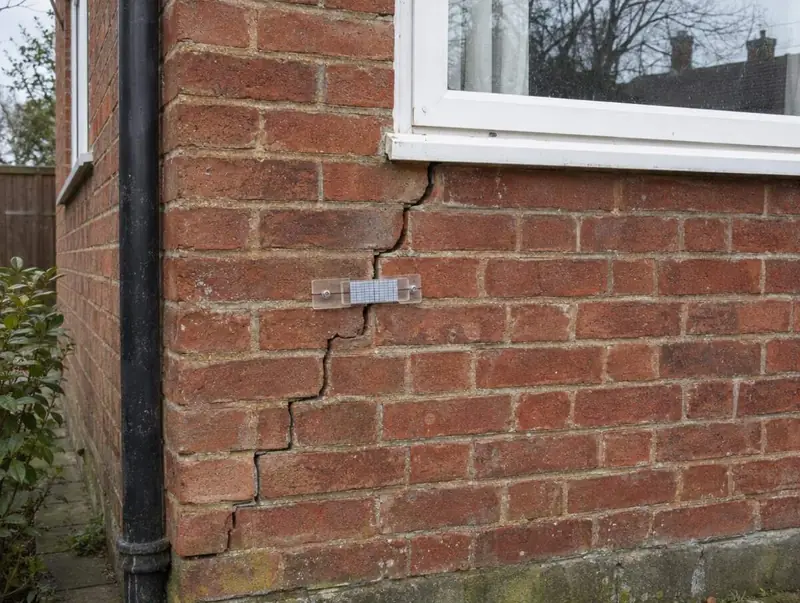
Once movement has stopped, cracked brickwork is cut along the bed joints, stainless helical bars are bonded in to tie the wall together, and the joints are repointed to match. Inside, plaster is renewed along the crack line before redecoration.
Best for: Category 1 to 3 cracking in walls that are otherwise sound
Foundation strengthening
Where the ground cannot be made stable, the load is carried down to firmer soil by underpinning, a beam-and-base scheme, mini-piles or resin injection, depending on the soil and access. It is designed by an engineer and is the exception, not the rule.
Best for: Ongoing movement where removing the cause has not worked
Remove the cause, then repair
Most subsidence is dealt with this way. The drain is repaired or the vegetation managed, the house is watched to confirm it has stabilised, and then the cracks are stitched, repointed and made good inside. It is the least disruptive route and usually the cheapest.
Best for: Clay movement or drain leaks where the cause can be removed
From first photo to finished repair
Send photos or call
Send photos of the cracks with a coin or tape for scale, and say when you first noticed them. We give a free initial assessment and suggest whether an engineer, a drain survey or your insurer comes first.
Find the cause
An independent chartered structural engineer inspects the house and, where needed, arranges a drain survey, trial pits or soil tests. We can arrange the engineer. The aim is to know what is moving, and why, before money goes on repairs.
Written quote
We price the agreed repair and confirm a fixed price in writing once it is specified. If there is an insurance claim, we can price to the loss adjuster’s or engineer’s schedule instead of our own scope.
Symptoms that point to subsidence repairs
- Diagonal cracks wider at the top, running from window or door corners
- Wallpaper rippling or tearing where the wall meets the ceiling
- Fresh cracks showing on both the inside and outside of one wall
- Cracks that open in summer and partly close again in winter
Do you need approval for subsidence repairs in England?
In England, underpinning and other work that alters or strengthens a wall or foundation is building work under the Building Regulations (Part A, structure), so building control approves and inspects it. Like-for-like repairs often are not, and we tell you which applies before a price is agreed. Work to a party wall, or excavation close to a neighbour’s foundations, can also need a notice under the Party Wall etc. Act 1996.
Towns in Hampshire we cover for subsidence repairs
- Southampton
- Portsmouth
- Basingstoke
- Waterlooville
- Farnborough
- Eastleigh
- Winchester
- Havant
- Andover
- Fareham
- Aldershot
- Fleet
- Totton
- New Milton
- Bordon
- Hythe
- Alton
- Emsworth
- Hedge End
- Romsey
- Hayling Island
- Tadley
Frequently asked questions
Is the ground in Hampshire prone to subsidence?
Central Hampshire is chalk, while the south around Portsmouth, Southampton and the New Forest fringe and the north-east around Farnborough sit on London Clay, Reading Beds and other clays and sands. The clay areas see seasonal movement near trees. Ground movement here is more often linked to soils, drains and trees than to mining. Only an investigation on site can say why a particular building has moved.
How much will subsidence repairs cost in Hampshire?
On South East rates, subsidence repairs starts from about £2,800 per property, including VAT. The written price depends on the extent of the damage, access and whether an engineer or building control is needed.
Do you need to visit before giving a price?
Not at first. We give a free initial assessment from your photos or a call, and a no-obligation written quote once the scope is clear. A fixed price follows in writing once the repair is specified, which normally needs a survey.
How long should I wait before repairing subsidence cracks?
Usually until the cause has been dealt with and the engineer is satisfied that movement has stopped. On clay that can mean watching the house through a summer and a winter. Repairing too early risks the same cracks opening again.
Should I cut down the tree near my house?
Not without advice, because felling a mature tree on clay can make things worse. As the roots stop drawing water, the clay swells and can lift the foundations, which is called heave. Pruning or staged removal may be advised instead. Check whether the tree is protected.