Wiltshire · England
Roof structure repairs in Wiltshire
Looking for roof structure repairs in Wiltshire? Send us photos for a free initial view. Clay soils are found in parts of Wiltshire, so we look at the ground, drains and nearby trees before recommending anything.
Guide price from£310per rafter inc VAT
- Area
- Wiltshire
- Pricing region
- South West
- Ground
- Clay in parts
- Towns listed
- 9
Why does the ground in Wiltshire matter for roof structure repairs?
Southern Wiltshire is chalk, while the north around Swindon, Chippenham and Trowbridge sits on Oxford and Kimmeridge Clays that are prone to seasonal movement near trees. Bath stone was mined underground around Corsham.
Ground movement here is more often linked to soils, drains and trees than to mining. Across Wiltshire, most homes are stone cottages, railway terraces in Swindon, and large post-war and new-build estates.
Roof structure repairs prices in Wiltshire
These are guide prices for Wiltshire, using South West rates and including VAT. Your written quote follows photos or a survey, and is fixed once the repair is specified.
| Item | Guide price | Per |
|---|---|---|
| Repairing or doubling a rafter | £310 – £620 | per rafter |
| Purlin and strut strengthening | £1,250 – £3,100 | per roof |
| Tying in roof spread (straps and ties)est. | £825 – £2,600 | per roof |
How we usually approach roof structure repairs
Repairing or doubling rafters
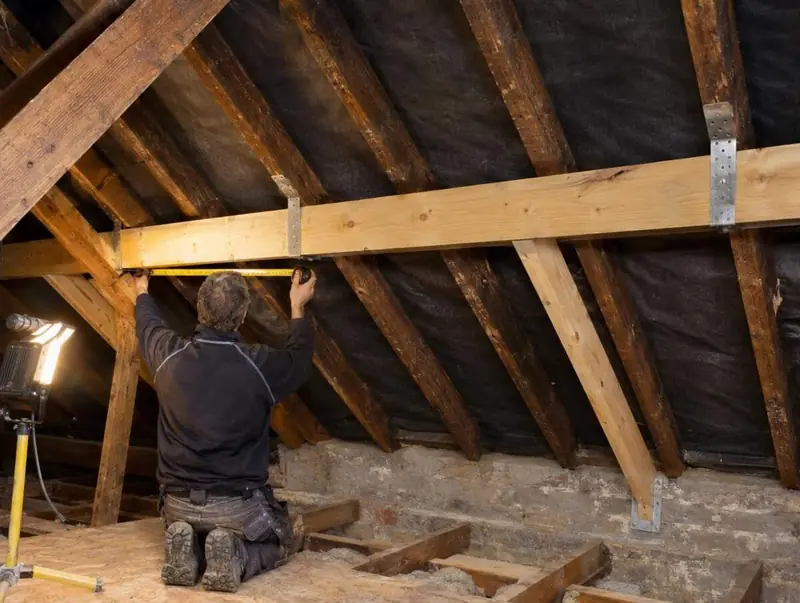
Cracked, sagging or rotten rafters are strengthened by fixing a new timber alongside, often called doubling, and rotten rafter feet are cut back and spliced. The work is usually done from inside the loft with the tiles left in place, unless the covering is coming off anyway.
Best for: Individual rafters that have cracked, sagged or rotted at the feet
Purlin and strut strengthening
Undersized purlins are strengthened with extra timber or replaced, and new struts are taken down to a load-bearing wall. Where there is no suitable wall, an engineer designs the load path. Temporary props hold the roof while members are changed.
Best for: Sagging slopes, slim purlins and struts removed from the loft
Tying in roof spread
New ties, collars or steel straps connect opposite rafters, or fix the rafter feet and wall plate firmly to the ceiling joists, so the outward thrust is resisted. Leaning wall heads are strapped back to the roof, and a badly spread roof may need partly rebuilding first.
Best for: Walls pushed out at eaves level by spreading rafters
What happens during roof structure repairs, step by step?
Send photos
Photograph the roof from across the street, both slopes if you can, and the loft timbers with a torch. Include the eaves and any cracks just below them. From these we can usually tell sag from spread and whether an engineer is needed.
Loft and outside survey
On site we check rafter sizes and spacing, purlins, struts, ties and wall plates, look for rot and past alterations, and measure any lean at the wall head. The covering is noted too, because its weight affects the repair.
Engineer’s design where needed
Where purlins, struts or ties must be redesigned, or the roof carries a heavier covering, an independent chartered structural engineer is appointed to specify the work. We can arrange this, and their design sets the sizes and fixings.
What to look for before calling about roof structure repairs
- Top of an outside wall leaning out at eaves level
- Ridge line dipping in the middle when seen from the street
- Roof slope looking hollow or wavy between the ridge and the gutter
- Struts, collars or ties cut out or missing in the loft
Do you need approval for roof structure repairs in England?
In England, underpinning and other work that alters or strengthens a wall or foundation is building work under the Building Regulations (Part A, structure), so building control approves and inspects it. Like-for-like repairs often are not, and we tell you which applies before a price is agreed. Work to a party wall, or excavation close to a neighbour’s foundations, can also need a notice under the Party Wall etc. Act 1996.
Roof structure repairs near you in Wiltshire
Questions about roof structure repairs in Wiltshire
Does the ground around Swindon cause cracking?
Southern Wiltshire is chalk, while the north around Swindon, Chippenham and Trowbridge sits on Oxford and Kimmeridge Clays that are prone to seasonal movement near trees. Bath stone was mined underground around Corsham. Ground movement here is more often linked to soils, drains and trees than to mining. Only an investigation on site can say why a particular building has moved.
How much will roof structure repairs cost in Wiltshire?
On South West rates, roof structure repairs starts from about £310 per rafter, including VAT. The written price depends on the extent of the damage, access and whether an engineer or building control is needed.
Can heavy concrete tiles damage a roof?
Yes, if the frame was designed for lighter slate or tiles and was not strengthened. The extra weight makes rafters and purlins sag and can bring on roof spread. Before re-roofing in a heavier material, have the structure checked and notify building control.
Is a sagging roof ridge dangerous?
A slight, even dip in an old roof is often historic movement that stopped long ago. A sag that is getting worse, cracking timbers, walls pushing out at the eaves or recently removed struts should be checked soon. Avoid storing heavy items in the loft until then.
Can the roof be strengthened without removing the tiles?
In most cases, yes. Doubling rafters, adding struts and fitting ties can all be done from inside the loft with the coverings in place. Tiles usually only come off where timber near the eaves is badly decayed, or the roof is being re-covered anyway.