Edinburgh and the Lothians · Scotland
Mining subsidence repairs in Edinburgh and the Lothians
We arrange surveys and price mining subsidence repairs throughout Edinburgh and the Lothians. Most of Edinburgh and the Lothians is on firmer ground than the clay belts of the south-east, and we take that into account before recommending a method.
Guide price from£75per metre of crack inc VAT
- Area
- Edinburgh and the Lothians
- Pricing region
- Scotland
- Ground
- Mostly firmer ground
- Towns listed
- 12
Is Edinburgh and the Lothians prone to ground movement?
Edinburgh is volcanic and sedimentary rock with glacial till, while the Midlothian and East Lothian coalfields and oil-shale workings in West Lothian have left recorded mine workings and bings.
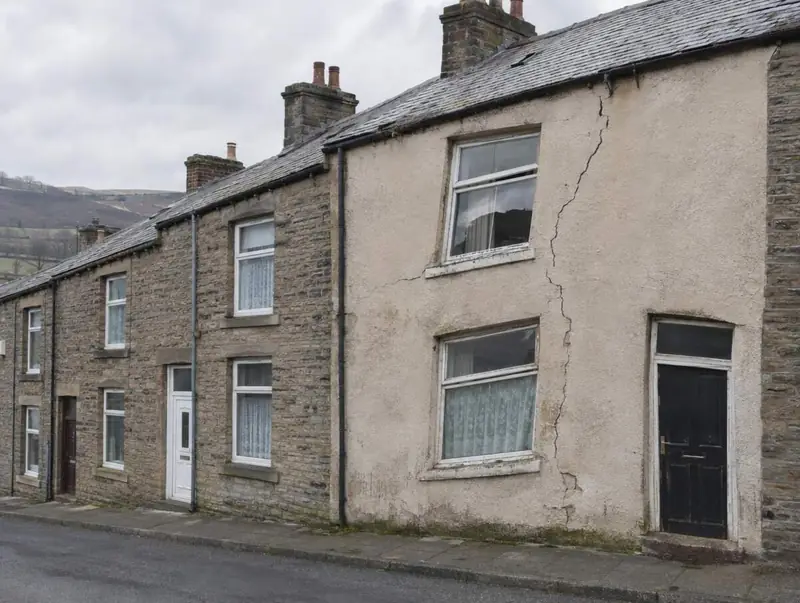
Parts of Edinburgh and the Lothians lie on a former coalfield, so a coal mining search is worth checking if movement has no obvious cause. Typical buildings in Edinburgh and the Lothians: Sandstone tenements and Georgian terraces, miners' rows, bungalows and post-war estates.
From first photo to finished repair
Report and photograph
Photograph every crack with a scale and note the date it appeared. Report suspected coal-mining damage to the Mining Remediation Authority, or the operator of a working mine, and notify your home insurer. Time limits can apply, so report promptly.
Check the mining record
A coal mining report or a search of mining records shows whether recorded workings or shafts lie near the property. Records are incomplete, so a clear report does not rule mining out, and a recorded seam nearby does not prove it is the cause.
Repairs and records
Work proceeds once any ground treatment is complete and the engineer is satisfied. We stitch, stabilise or underpin as specified, make good inside and out, deal with building control where needed, and hand over records for your file.
Symptoms that point to mining subsidence repairs
- The whole house leaning slightly, with doors swinging open
- Damage that does not change with the seasons
- Steps or ridges forming in paths, kerbs or garden walls
- Cracks appearing suddenly across several walls at once
Guide prices for mining subsidence repairs in Edinburgh and the Lothians
Prices in Edinburgh and the Lothians are worked out on Scotland rates. They include VAT and are a starting point: access, the extent of the damage and whether an engineer or building control is involved all move the figure.
| Item | Guide price | Per |
|---|---|---|
| Crack stitching and making good | £75 – £170 | per metre of crack |
| Re-levelling or ground stabilisation by resin injection | £760 – £1,400 | per metre of wall |
| Underpinning where the engineer specifies it | £950 – £3,300 | per metre of wall |
| Repair schedule for a claim (pricing an engineer's scope)est. | Free to request | — |
Methods for mining subsidence repairs
Crack stitching and making good
Where the ground has stopped moving and the damage is cracking, the walls are stitched with stainless helical bars, repointed and replastered. This covers a large share of mining damage, especially legacy movement that settled years ago and left cracks behind.
Best for: Cracking after movement that has now stopped
Pricing an engineer’s repair scope
When a claim is under way, the engineer or claim handler usually writes the scope of repairs. We price that schedule item by item, at no charge to request, and carry out the work if you choose us. Anything outside the scope is shown separately.
Best for: Homeowners with a mining claim or engineer’s report in hand
Ground stabilisation by resin injection
For localised settlement in the upper soil layers, expanding resin can be injected beneath the footings to firm the ground and sometimes reduce a small tilt. It is not suitable for large voids deep below, which need grouting or other specialist treatment first.
Best for: Shallow settlement once deeper voids are ruled out or treated
Do you need approval for mining subsidence repairs in Scotland?
In Scotland, underpinning and other structural alterations generally need a building warrant from the council’s building standards service before work starts, and a completion certificate at the end; small like-for-like repairs often do not. There is no Party Wall Act in Scotland; shared walls are covered by title deeds and, for flats, the Tenements (Scotland) Act 2004.
Mining subsidence repairs near you in Edinburgh and the Lothians
- Edinburgh
- Livingston
- Musselburgh
- Bathgate
- Bonnyrigg
- Penicuik
- Broxburn
- Mayfield
- Linlithgow
- Armadale
- Tranent
- Dunbar
Frequently asked questions
Does the ground around Edinburgh cause cracking?
Edinburgh is volcanic and sedimentary rock with glacial till, while the Midlothian and East Lothian coalfields and oil-shale workings in West Lothian have left recorded mine workings and bings. Parts of Edinburgh and the Lothians lie on a former coalfield, so a coal mining search is worth checking if movement has no obvious cause. Only an investigation on site can say why a particular building has moved.
How much will mining subsidence repairs cost in Edinburgh and the Lothians?
On Scotland rates, mining subsidence repairs starts from about £75 per metre of crack, including VAT. The written price depends on the extent of the damage, access and whether an engineer or building control is needed.
What about salt, lead or ironstone mining?
Damage from non-coal mining follows different routes. Cheshire’s brine areas have their own statutory compensation arrangements, while metal, ironstone and limestone workings often have no equivalent scheme, leaving your home insurer as the main route. A solicitor or your insurer can confirm which applies.
Who pays for coal-mining subsidence damage?
Liability for damage from past coal mining usually rests with the Mining Remediation Authority, or with the operator of a working mine. They investigate whether coal mining caused the damage before agreeing any repair. Tell your home insurer as well, because policy cover and the mining claim can overlap.
Can mining subsidence start again years later?
It can, particularly over shallow workings or old shafts, where collapse can happen long after mining ended. Movement from deep longwall mining generally settled within a few years of extraction. An engineer can judge whether current damage is old, settled cracking or new movement.