Hammersmith and Fulham · Greater London
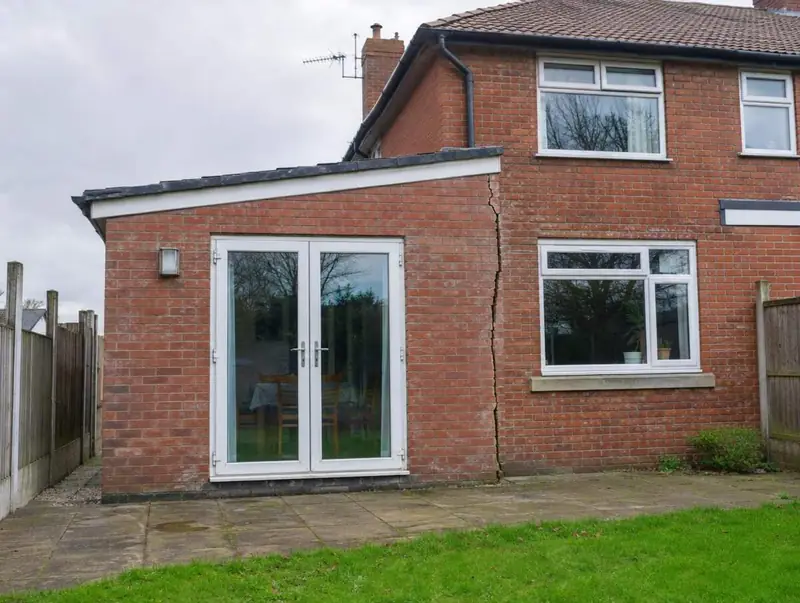
Extension pulling away repairs in Hammersmith and Fulham
For many Hammersmith and Fulham homes, the extension was added decades after the house was built, on concrete that never matched the original footings. Where that difference causes movement, a designed movement joint or a deeper foundation is the usual fix.
Guide price from£750per junction inc VAT
- Postcodes
- SW13, SW14, W3, W4, W6
- Population
- about 180,000
- Area
- Greater London
- Pricing region
- London
What should you know about the ground under Hammersmith and Fulham?
We cover the whole of Hammersmith and Fulham, including postcode districts SW13, SW14, W3, W4, W6; about 180,000 people live in the borough. Nearby, we also cover Kensington and Chelsea (1 miles), Wandsworth (3 miles) and Westminster (4 miles).
Greater London is one of the parts of the UK where clay soils are most likely to move with the seasons. Ground movement here is more often linked to soils, drains and trees than to mining. Typical buildings in Greater London: Victorian and Edwardian terraces with shallow footings, inter-war semis in the outer boroughs, and converted flats and mansion blocks.
Guide prices for extension pulling away repairs in Hammersmith and Fulham
Guide prices below are for homes in Hammersmith and Fulham, on London rates and including VAT. A survey or good photos let us turn them into a fixed written price.
| Item | Guide price | Per |
|---|---|---|
| Junction crack repair with stainless tiesest. | £750 – £2,500 | per junction |
| Movement joint and making goodest. | £500 – £1,500 | per junction |
| Underpinning the extension where needed | £1,250 – £3,100 | per metre of wall |
Methods for extension pulling away repairs
Underpinning the extension
If the extension is still dropping because its footings are too shallow or on poor ground, they are taken deeper by mass concrete, beam-and-base or mini-piles. The engineer designs the scheme, and the junction is repaired once the new foundation is in.
Best for: Active movement from shallow footings, roots or soft ground
Junction crack repair with stainless ties
The open joint is cut out, stainless ties or helical bars are fixed across it into both the old and new masonry, and the joint is repointed or rendered to match. Inside, the corner is replastered. This suits extensions that moved once and have since stopped.
Best for: Settled extensions with a stable gap at the junction
From first photo to finished repair
Choose the fix
The engineer decides between ties, a movement joint or underpinning. We confirm a fixed price in writing once the repair is specified, covering the junction, flashings, internal finishes and any foundation work.
Repair the junction
Drains are repaired first if they are leaking. The joint is then tied, formed as a movement joint or rebuilt after underpinning, with roof flashings reset so the junction stays watertight. Building control is handled where needed.
Finish and hand over
Internal corners are replastered, skirtings and coving refixed, and doors or windows in the extension eased where the movement affected them. Records of the repair and any approvals are passed to you.
Symptoms that point to extension pulling away repairs
- Daylight or draughts showing through the internal corner joint
- Mastic or render at the joint repeatedly splitting open
- Floor level dropping where the extension and house floors meet
Rules for extension pulling away repairs in England
In England, underpinning and other work that alters or strengthens a wall or foundation is building work under the Building Regulations (Part A, structure), so building control approves and inspects it. Like-for-like repairs often are not, and we tell you which applies before a price is agreed. Work to a party wall, or excavation close to a neighbour’s foundations, can also need a notice under the Party Wall etc. Act 1996.
Frequently asked questions
How much should I budget for extension pulling away repairs in Hammersmith and Fulham?
Guide prices for extension pulling away repairs in Hammersmith and Fulham start from about £750 per junction, including VAT, on London rates. Your fixed written price follows photos or a survey and depends on the extent of the work and access.
Can you survey a property in Hammersmith and Fulham?
Yes, Hammersmith and Fulham is covered, along with postcode districts SW13, SW14, W3, W4. We also cover nearby Kensington and Chelsea and Wandsworth.
Why do houses in Greater London crack?
Most of Greater London sits on London Clay, among the most shrinkage-prone ground in the UK, with river gravels along the Thames. Subsidence claims here are among the most frequent in the country, especially after dry summers and near street and garden trees. Only an investigation can say why a particular building has moved.
Is it normal for an extension to crack at the join?
A fine crack at the junction is fairly common, especially in the first few years as a new extension settles. It becomes a concern when the gap is widening, tapering, letting in water or matched by sticking doors and sloping floors. Those signs point to continuing movement.
Will my extension need underpinning?
Often not. Many separating extensions are fixed by repairing a drain, tying the junction or forming a movement joint. Underpinning is for extensions that keep dropping because their footings are too shallow or the ground beneath is poor, as shown by monitoring.
Related work in Hammersmith and Fulham
Extension pulling away repairs near Hammersmith and Fulham
If the junction at your Hammersmith and Fulham property keeps reopening, send dated photos and we will suggest whether monitoring, a drain survey or a repair comes next.