Weymouth · Dorset
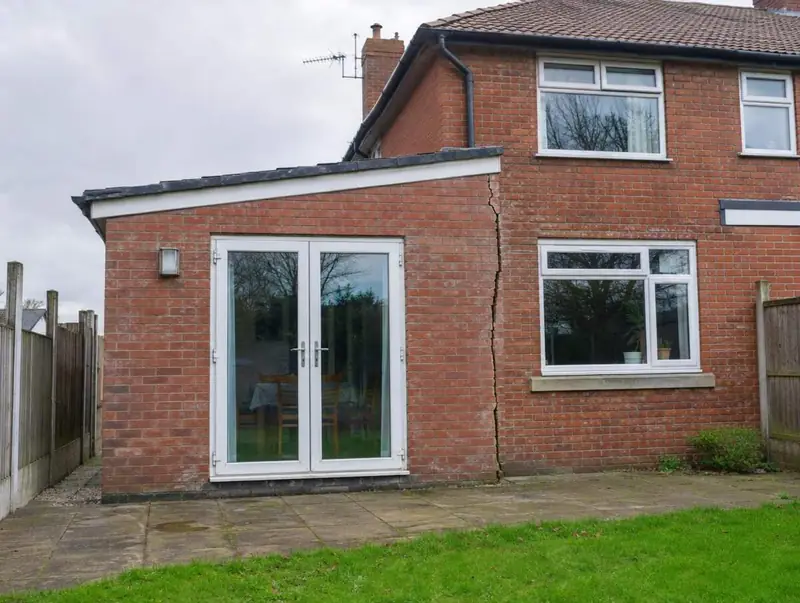
Extension pulling away repairs in Weymouth
For many Weymouth homes, the extension was added decades after the house was built, on concrete that never matched the original footings. Where that difference causes movement, a designed movement joint or a deeper foundation is the usual fix.
Guide price from£620per junction inc VAT
- Postcodes
- DT3, DT4
- Population
- about 53,000
- Area
- Dorset
- Pricing region
- South West
Is Dorset prone to ground movement?
Weymouth (DT3, DT4) has around 53,000 residents and sits in Dorset. Neighbouring towns we cover: Dorchester (7 miles), Poole (22 miles) and Yeovil (24 miles).
Dorset has a mix of ground, with clay in some places and firmer rock in others. Ground movement here is more often linked to soils, drains and trees than to mining. What you mostly find across Dorset: stone and brick villages, Victorian villas in Bournemouth, and inter-war and post-war semis.
Extension pulling away repairs prices in Weymouth
These are guide prices for Weymouth, using South West rates and including VAT. Your written quote follows photos or a survey, and is fixed once the repair is specified.
| Item | Guide price | Per |
|---|---|---|
| Junction crack repair with stainless tiesest. | £620 – £2,050 | per junction |
| Movement joint and making goodest. | £410 – £1,250 | per junction |
| Underpinning the extension where needed | £1,050 – £2,600 | per metre of wall |
How we usually approach extension pulling away repairs
Junction crack repair with stainless ties
The open joint is cut out, stainless ties or helical bars are fixed across it into both the old and new masonry, and the joint is repointed or rendered to match. Inside, the corner is replastered. This suits extensions that moved once and have since stopped.
Best for: Settled extensions with a stable gap at the junction
Movement joint and making good
Where some seasonal movement is expected to continue, the junction is formed into a proper flexible movement joint with a compressible filler and sealant, so the two parts can move without cracking. Flashings and internal finishes are detailed to suit.
Best for: Minor ongoing movement that does not threaten the structure
What happens during extension pulling away repairs, step by step?
Find what is moving
An independent chartered structural engineer can inspect, and we can arrange one. A drain survey under the extension, a trial pit at its footing and tell-tale monitoring across the joint are common checks before choosing the repair.
Choose the fix
The engineer decides between ties, a movement joint or underpinning. We confirm a fixed price in writing once the repair is specified, covering the junction, flashings, internal finishes and any foundation work.
Repair the junction
Drains are repaired first if they are leaking. The joint is then tied, formed as a movement joint or rebuilt after underpinning, with roof flashings reset so the junction stays watertight. Building control is handled where needed.
What to look for before calling about extension pulling away repairs
- Mastic or render at the joint repeatedly splitting open
- Patio doors or windows in the extension starting to bind
- Extension roof flashing lifting off the original wall
Rules for extension pulling away repairs in England
In England, underpinning and other work that alters or strengthens a wall or foundation is building work under the Building Regulations (Part A, structure), so building control approves and inspects it. Like-for-like repairs often are not, and we tell you which applies before a price is agreed. Work to a party wall, or excavation close to a neighbour’s foundations, can also need a notice under the Party Wall etc. Act 1996.
Questions about extension pulling away repairs in Weymouth
How much should I budget for extension pulling away repairs in Weymouth?
Guide prices for extension pulling away repairs in Weymouth start from about £620 per junction, including VAT, on South West rates. Your fixed written price follows photos or a survey and depends on the extent of the work and access.
Can you survey a property in Weymouth?
Yes. We take enquiries from across Weymouth, including DT3, DT4, and from nearby places such as Dorchester and Poole. Send photos for a free initial view and we will tell you what happens next.
Why do houses in Dorset crack?
Dorset mixes chalk downs, Oxford and Kimmeridge Clays in the vales, and the sands and gravels of the Poole basin. Clay vales can shrink and swell, and parts of the coast are known for landslip. Only an investigation can say why a particular building has moved.
Will my extension need underpinning?
Often not. Many separating extensions are fixed by repairing a drain, tying the junction or forming a movement joint. Underpinning is for extensions that keep dropping because their footings are too shallow or the ground beneath is poor, as shown by monitoring.
Why is my extension pulling away from my house?
Usually because the extension and the house sit on different foundations that react differently to the ground. Shallow extension footings, leaking drains under the extension, nearby roots and weak tie-ins between old and new walls are the common causes.
Related work in Weymouth
- Structural crack repairs
- Bay window subsidence repairs
- Gable end wall repairs
- Roof structure repairs
- Wall tie replacement
Extension pulling away repairs near Weymouth
Send photos of the extension junction at your Weymouth home, inside and out, and we will give a free initial assessment and a guide price.