Cambridge · Cambridgeshire
Structural surveys and crack monitoring in Cambridge
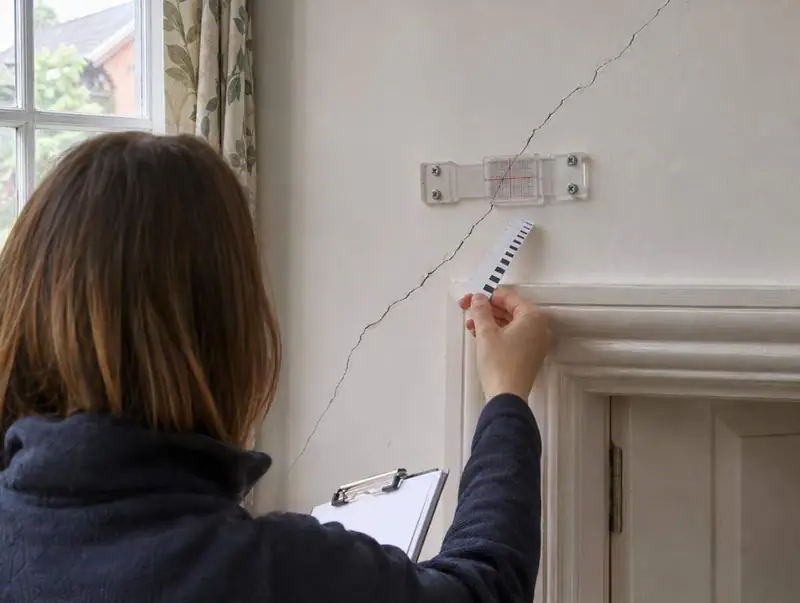
For homeowners in Cambridge unsure whether a crack is getting worse, the honest answer often needs measurement rather than a single look. Tell-tales and level points turn the question into clear figures the engineer can interpret.
Guide price from£525per property inc VAT
- Postcodes
- CB2, CB4
- Population
- about 150,000
- Area
- Cambridgeshire
- Pricing region
- East of England
How do local ground conditions affect structural surveys and crack monitoring in Cambridge?
Cambridge is in Cambridgeshire and takes in postcode districts CB2, CB4. About 150,000 people live there. Nearby, we also cover Royston (12 miles), St Ives (12 miles) and Newmarket (13 miles).
Much of Cambridgeshire sits on clay that shrinks in dry summers and swells in wet winters. Ground movement here is more often linked to soils, drains and trees than to mining. Across Cambridgeshire, most homes are Victorian terraces in Cambridge and Peterborough, fen-edge cottages, and extensive post-war and new-build estates.
Structural surveys and crack monitoring prices in Cambridge
These are guide prices for Cambridge, using East of England rates and including VAT. Your written quote follows photos or a survey, and is fixed once the repair is specified.
| Item | Guide price | Per |
|---|---|---|
| Structural engineer's inspection and report | £525 – £2,100 | per property |
| Crack monitoring: installation and three seasonal readings | £1,500 – £2,500 | per programme |
| Extra monitoring visit | £440 | per visit |
How we usually approach structural surveys and crack monitoring
Engineer’s structural inspection and report
A chartered structural engineer visits, records the cracks, checks the walls, floors, drains and nearby trees, and writes a report on the likely cause and next steps. It may recommend monitoring, investigations such as trial pits, or a repair specification.
Best for: A first expert opinion on any significant cracking
Tell-tales and crack-width monitoring
Gauges are fixed across key cracks and read at set intervals, or reference studs are measured with callipers to a fraction of a millimetre. The readings show whether each crack is widening, closing or stable, and whether any change follows the seasons.
Best for: Tracking individual cracks over the seasons
What happens during structural surveys and crack monitoring, step by step?
Free initial assessment
Send photos of the cracks with something for scale and tell us when they appeared. We give a free view on whether an engineer’s inspection is worthwhile, and whether your insurer should be told first.
Install monitoring points
Tell-tales, measuring studs or level points are fixed at the locations the engineer chooses. A base reading is taken on the first visit, so every later reading can be compared against it.
Repair or close
If the readings show the house is stable, the engineer specifies the repair and we confirm a fixed price in writing. If movement continues, the cause is investigated further before a foundation repair is designed.
What to look for before calling about structural surveys and crack monitoring
- Cracks reopening after being filled and decorated
- A crack you are unsure is old or new
- An insurer or loss adjuster asking for monitoring
Rules for structural surveys and crack monitoring in England
Like-for-like repairs such as crack stitching and repointing do not usually need building control approval in England, but anything that changes or strengthens the structure, such as underpinning or rebuilding a wall, does. If the work touches a party wall, the Party Wall etc. Act 1996 may apply.
Questions about structural surveys and crack monitoring in Cambridge
How much should I budget for structural surveys and crack monitoring in Cambridge?
Guide prices for structural surveys and crack monitoring in Cambridge start from about £525 per property, including VAT, on East of England rates. Your fixed written price follows photos or a survey and depends on the extent of the work and access.
Can you survey a property in Cambridge?
Yes. We take enquiries from across Cambridge, including CB2, CB4, and from nearby places such as Royston and St Ives. Send photos for a free initial view and we will tell you what happens next.
Why do houses in Cambridgeshire crack?
Gault Clay underlies much of the Cambridge area and Oxford Clay the west of the county around Peterborough and Huntingdon, while the northern fens are peat and silt that can shrink as they dry. Both clay and peat ground can move with the seasons. Only an investigation can say why a particular building has moved.
Who carries out the crack monitoring?
An independent chartered structural engineer designs the monitoring and interprets the readings. We can arrange the engineer for you. We are the repair contractor, so we carry out the repair the engineer specifies once the monitoring has shown what is needed.
When should I get a structural engineer’s report?
It is worth getting one when cracks are wider than a few millimetres, tapered, getting worse, or accompanied by sticking doors and sloping floors. A mortgage valuer or insurer asking for one is another clear trigger. Fine, stable hairline cracks often do not need one.
Related work in Cambridge
- Crack stitching
- Lintel replacement
- Floor joist repairs
- Resin injection ground stabilisation
- Subsidence insurance claim repairs
Structural surveys and crack monitoring near Cambridge
Need a structural engineer’s report for a property in Cambridge? Call or send photos, and we can arrange an independent inspection.