Newport · Isle of Wight
Bowing wall repairs in Newport
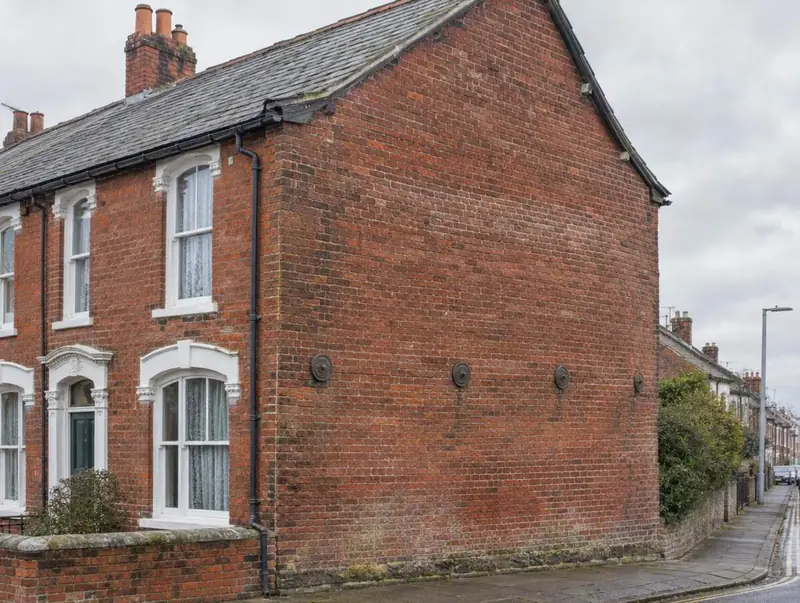
Sighting along a wall at your Newport home and seeing a curve can be unsettling. Send us photos with a level held against it, and we will explain what is likely holding it, or not, and what the repair involves.
Guide price from£1,100per wall inc VAT
- Postcodes
- PO30, PO32, PO33
- Population
- about 25,000
- Area
- Isle of Wight
- Pricing region
- South East
Is Isle of Wight prone to ground movement?
Postcode districts PO30, PO32, PO33 cover Newport, a Isle of Wight town of about 25,000 people. If you are just outside Newport, we also cover Cowes (4 miles), Ryde (6 miles) and Sandown (7 miles).
Shrinkable clay is widespread in Isle of Wight. Ground movement here is more often linked to soils, drains and trees than to mining. Typical buildings in Isle of Wight: Victorian seaside villas, terraces in Ryde and Newport, and post-war bungalows.
Bowing wall repairs prices in Newport
These are guide prices for Newport, using South East rates and including VAT. Your written quote follows photos or a survey, and is fixed once the repair is specified.
| Item | Guide price | Per |
|---|---|---|
| Lateral restraint for a typical gable | £1,100 – £3,350 | per wall |
| Remedial restraint ties installed | £30 – £65 | per tie |
| Partial rebuild of a badly distorted sectionest. | £3,350 – £8,950 | per section |
How we usually approach bowing wall repairs
Stitching a delaminating wall
Where the layers of a solid wall have separated, long stainless ties are drilled in from the face and bonded into the inner layer to bind the wall together again. This is often combined with restraint ties, so the wall is both reconnected through its thickness and tied back to the structure.
Best for: Solid walls where the outer layer has pulled away
Restraint ties into the floor
Stainless restraint ties are drilled through the wall and fixed into the floor joists or into blocking between them. Where joists run parallel, noggins are fitted across several joists so the tie has something solid to hold. A neat plate or a buried fixing is left on the outside face.
Best for: Walls bowing at floor level where joists run alongside
What happens during bowing wall repairs, step by step?
Open up inside
Floorboards or a ceiling strip are lifted along the affected wall to expose the joists. We fit noggins where joists run alongside, and plan furniture moves with you, since this is the most disruptive part of the job.
Fit the ties and straps
Ties are drilled through and fixed, or straps fitted and secured, at the spacing specified. Any rebuild is carried out at this stage, with temporary propping in place until the new brickwork has gained strength.
Close up and make good
Boards are relaid, plaster and outside fixings made good, and cracked joints repointed. You receive a record of the restraint positions, which helps if you sell or if an engineer needs to check the wall again later.
What to look for before calling about bowing wall repairs
- Gutters or the roof edge no longer lining up with the wall
- A visible belly in the wall when you sight along it
- Horizontal cracking at first-floor or ceiling level
Rules for bowing wall repairs in England
In England, underpinning and other work that alters or strengthens a wall or foundation is building work under the Building Regulations (Part A, structure), so building control approves and inspects it. Like-for-like repairs often are not, and we tell you which applies before a price is agreed. Work to a party wall, or excavation close to a neighbour’s foundations, can also need a notice under the Party Wall etc. Act 1996.
Questions about bowing wall repairs in Newport
How much should I budget for bowing wall repairs in Newport?
Guide prices for bowing wall repairs in Newport start from about £1,100 per wall, including VAT, on South East rates. Your fixed written price follows photos or a survey and depends on the extent of the work and access.
Can you survey a property in Newport?
Survey visits to Newport are by arrangement because of travel and access. We can still give a free initial view from photos, and we tell you any travel cost before a visit is booked.
Why do houses in Isle of Wight crack?
The island has clays, sands and chalk, and the south coast around Ventnor sits on one of the largest urban landslide complexes in Europe. Ground movement there is a landslip question as much as a clay one. Only an investigation can say why a particular building has moved.
Can a bowing wall be pushed back straight?
Usually not. Masonry rarely returns to plumb without cracking, so the normal aim is to stop further movement and leave the wall where it is. If the bow is too great to accept, that section is rebuilt rather than forced back.
How do I know if my wall is bowing?
Hold a long spirit level or a taut string against the wall and look for a gap in the middle. From inside, gaps between floorboards and skirting on an outside wall are a common clue. Photos showing the gap help us judge it before a visit.
Related work in Newport
- Gable end wall repairs
- Retaining wall repairs
- Brick arch repairs
- Structural crack repairs
- Roof structure repairs
Bowing wall repairs near Newport
Our guide-price tool covers restraint work in Newport; add a few photos and we can say whether ties alone are likely to be enough.