Lowestoft · Suffolk
Subsidence repairs in Lowestoft
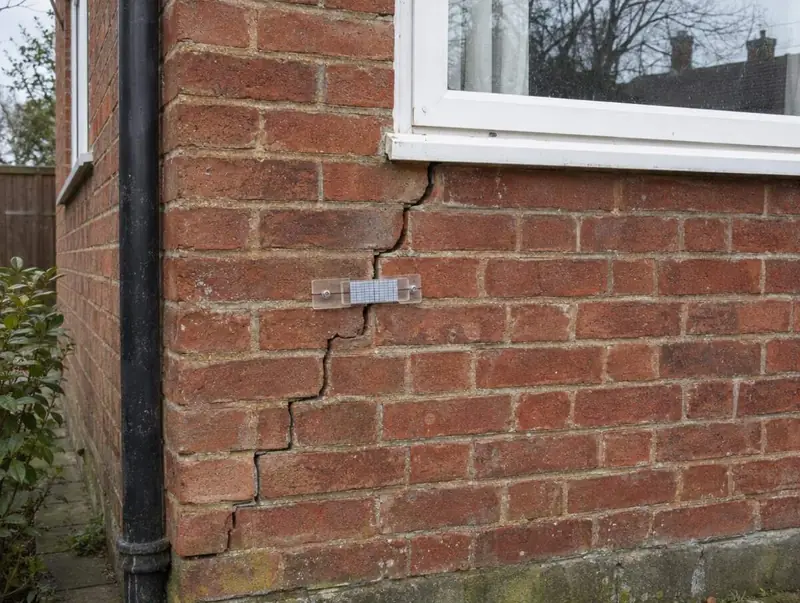
If doors have started sticking in your Lowestoft home and new cracks have appeared, it is worth acting before they widen. We can look at photos first and tell you whether an engineer, a drain survey or your insurer should be the next call.
Guide price from£2,600per property inc VAT
- Postcodes
- NR32, NR33
- Population
- about 71,000
- Area
- Suffolk
- Pricing region
- East of England
Why does the ground in Suffolk matter for subsidence repairs?
Lowestoft is in Suffolk and takes in postcode districts NR32, NR33. About 71,000 people live there. Neighbouring towns we cover: Great Yarmouth (9 miles) and Norwich (22 miles).
Suffolk is one of the parts of the UK where clay soils are most likely to move with the seasons. Ground movement here is more often linked to soils, drains and trees than to mining. Across Suffolk, most homes are timber-framed and flint cottages, Victorian terraces in Ipswich and Lowestoft, and post-war estates.
Guide prices for subsidence repairs in Lowestoft
These are guide prices for Lowestoft, using East of England rates and including VAT. Your written quote follows photos or a survey, and is fixed once the repair is specified.
| Item | Guide price | Per |
|---|---|---|
| Structural engineer's investigation and report | £525 – £2,100 | per property |
| CCTV drain survey (common first check) | £160 – £370 | per survey |
| Typical repair once the cause is dealt with: crack stitching and making goodest. | £2,600 – £12,600 | per property |
| Foundation strengthening where it is needed (see underpinning) | £1,050 – £3,700 | per metre of wall |
Methods for subsidence repairs
Crack stitching and making good
Once movement has stopped, cracked brickwork is cut along the bed joints, stainless helical bars are bonded in to tie the wall together, and the joints are repointed to match. Inside, plaster is renewed along the crack line before redecoration.
Best for: Category 1 to 3 cracking in walls that are otherwise sound
Foundation strengthening
Where the ground cannot be made stable, the load is carried down to firmer soil by underpinning, a beam-and-base scheme, mini-piles or resin injection, depending on the soil and access. It is designed by an engineer and is the exception, not the rule.
Best for: Ongoing movement where removing the cause has not worked
From first photo to finished repair
Send photos or call
Send photos of the cracks with a coin or tape for scale, and say when you first noticed them. We give a free initial assessment and suggest whether an engineer, a drain survey or your insurer comes first.
Find the cause
An independent chartered structural engineer inspects the house and, where needed, arranges a drain survey, trial pits or soil tests. We can arrange the engineer. The aim is to know what is moving, and why, before money goes on repairs.
Repairs and making good
Cracks are stitched and repointed outside, plaster is renewed along the crack lines inside, and sticking doors are eased. Where the work needs it, we deal with building control and hand over the paperwork.
Symptoms that point to subsidence repairs
- Fresh cracks showing on both the inside and outside of one wall
- Doors and windows that start to stick or no longer close
- Diagonal cracks wider at the top, running from window or door corners
Rules for subsidence repairs in England
In England, underpinning and other work that alters or strengthens a wall or foundation is building work under the Building Regulations (Part A, structure), so building control approves and inspects it. Like-for-like repairs often are not, and we tell you which applies before a price is agreed. Work to a party wall, or excavation close to a neighbour’s foundations, can also need a notice under the Party Wall etc. Act 1996.
Frequently asked questions
How much will subsidence repairs cost in Lowestoft?
Guide prices for subsidence repairs in Lowestoft start from about £2,600 per property, including VAT, on East of England rates. Your fixed written price follows photos or a survey and depends on the extent of the work and access.
Do you cover Lowestoft?
Yes. We take enquiries from across Lowestoft, including NR32, NR33, and from nearby places such as Great Yarmouth and Norwich. Send photos for a free initial view and we will tell you what happens next.
Is the ground in Suffolk prone to subsidence?
Much of Suffolk is chalky boulder clay, with London Clay around Ipswich and Felixstowe and sandier ground in the Breckland and on the coast. The clay areas are prone to seasonal shrinkage near trees. Only an investigation can say why a particular building has moved.
How do I know if cracks are subsidence?
Subsidence cracks are usually tapered, run diagonally from door and window corners, and show on both faces of the wall. Fine vertical cracks in new plaster are more often shrinkage. An engineer’s inspection, sometimes with monitoring, is the reliable way to tell.
Can I sell a house that has had subsidence?
Yes, though buyers and lenders will want paperwork. Keep the engineer’s report, monitoring results, the repair specification and any building control sign-off. A repaired house shown to be stable is far easier to sell than one with an open problem.
Other structural repairs in Lowestoft
- Brick arch repairs
- Subsidence insurance claim repairs
- Structural surveys and crack monitoring
- Structural crack repairs
- Underpinning
Subsidence repairs near Lowestoft
Send photos of the cracks in your Lowestoft home, with something for scale, and we will give a free initial assessment and tell you the sensible next step.