Strood · Kent
Subsidence repairs in Strood
If doors have started sticking in your Strood home and new cracks have appeared, it is worth acting before they widen. We can look at photos first and tell you whether an engineer, a drain survey or your insurer should be the next call.
Guide price from£2,800per property inc VAT
- Postcodes
- ME2
- Population
- about 33,000
- Area
- Kent
- Pricing region
- South East
How do local ground conditions affect subsidence repairs in Strood?
Strood, Kent: about 33,000 residents across postcode districts ME2. Nearby places we cover include Gillingham (3 miles), Gravesend (6 miles) and Longfield (8 miles).
Kent is one of the parts of the UK where clay soils are most likely to move with the seasons. Parts of Kent lie on a former coalfield, so a coal mining search is worth checking if movement has no obvious cause. Typical buildings in Kent: Victorian terraces in the Medway towns, weatherboarded and Wealden houses, 1930s semis and seaside bungalows.
Guide prices for subsidence repairs in Strood
For Strood we use South East rates. Treat the table as a budget guide, inc VAT; the price you pay is the one on your written quote.
| Item | Guide price | Per |
|---|---|---|
| Structural engineer's investigation and report | £560 – £2,250 | per property |
| CCTV drain survey (common first check) | £170 – £390 | per survey |
| Typical repair once the cause is dealt with: crack stitching and making goodest. | £2,800 – £13,400 | per property |
| Foundation strengthening where it is needed (see underpinning) | £1,100 – £3,900 | per metre of wall |
Methods for subsidence repairs
Remove the cause, then repair
Most subsidence is dealt with this way. The drain is repaired or the vegetation managed, the house is watched to confirm it has stabilised, and then the cracks are stitched, repointed and made good inside. It is the least disruptive route and usually the cheapest.
Best for: Clay movement or drain leaks where the cause can be removed
Foundation strengthening
Where the ground cannot be made stable, the load is carried down to firmer soil by underpinning, a beam-and-base scheme, mini-piles or resin injection, depending on the soil and access. It is designed by an engineer and is the exception, not the rule.
Best for: Ongoing movement where removing the cause has not worked
From first photo to finished repair
Send photos or call
Send photos of the cracks with a coin or tape for scale, and say when you first noticed them. We give a free initial assessment and suggest whether an engineer, a drain survey or your insurer comes first.
Deal with the cause
Drains are repaired, vegetation is managed on the engineer’s advice, or a foundation scheme is designed if nothing else will work. Where monitoring is recommended, readings run for several months to show the movement has stopped.
Repairs and making good
Cracks are stitched and repointed outside, plaster is renewed along the crack lines inside, and sticking doors are eased. Where the work needs it, we deal with building control and hand over the paperwork.
Symptoms that point to subsidence repairs
- Wallpaper rippling or tearing where the wall meets the ceiling
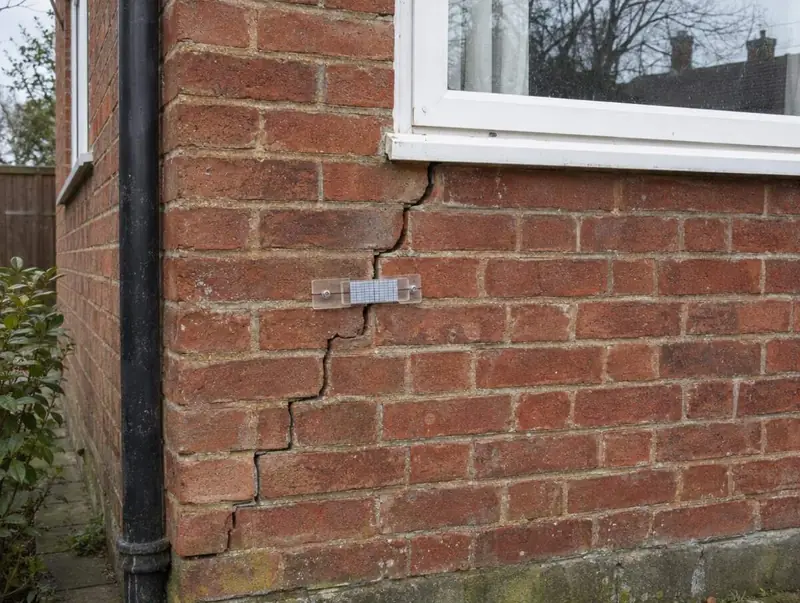
- Diagonal cracks wider at the top, running from window or door corners
- Doors and windows that start to stick or no longer close
Rules for subsidence repairs in England
In England, underpinning and other work that alters or strengthens a wall or foundation is building work under the Building Regulations (Part A, structure), so building control approves and inspects it. Like-for-like repairs often are not, and we tell you which applies before a price is agreed. Work to a party wall, or excavation close to a neighbour’s foundations, can also need a notice under the Party Wall etc. Act 1996.
Frequently asked questions
How much will subsidence repairs cost in Strood?
Guide prices for subsidence repairs in Strood start from about £2,800 per property, including VAT, on South East rates. Your fixed written price follows photos or a survey and depends on the extent of the work and access.
Do you cover Strood?
We do. Strood and the surrounding area are covered, including nearby Gillingham and Gravesend. A free initial assessment from your photos is the first step.
Is the ground in Kent prone to subsidence?
North Kent sits on London Clay, central Kent on Gault and Weald Clays and the Downs on chalk, so shrinkable clay is widespread. East Kent around Deal and Dover had a small deep coalfield, worked until the late 1980s. Only an investigation can say why a particular building has moved.
Should I cut down the tree near my house?
Not without advice, because felling a mature tree on clay can make things worse. As the roots stop drawing water, the clay swells and can lift the foundations, which is called heave. Pruning or staged removal may be advised instead. Check whether the tree is protected.
How do I know if cracks are subsidence?
Subsidence cracks are usually tapered, run diagonally from door and window corners, and show on both faces of the wall. Fine vertical cracks in new plaster are more often shrinkage. An engineer’s inspection, sometimes with monitoring, is the reliable way to tell.
Other structural repairs in Strood
- Bay window subsidence repairs
- Retaining wall repairs
- Chimney stack repairs
- Roof structure repairs
- Lintel replacement
Subsidence repairs near Strood
Get a free initial assessment for subsidence damage in Strood: send photos or call, and a written quote follows once the repair is specified.