Barking and Dagenham · Greater London
Subsidence repairs in Barking and Dagenham
Subsidence in Barking and Dagenham, as anywhere in Greater London, usually comes back to the ground beneath the footings: clay drying out, a drain leaking or roots taking water. Knowing which applies decides whether the repair is a few days of crack work or a longer foundation scheme.
Guide price from£3,100per property inc VAT
- Postcodes
- E20, IG3, IG11, RM6, RM7
- Population
- about 220,000
- Area
- Greater London
- Pricing region
- London
Why does the ground in Greater London matter for subsidence repairs?
Barking and Dagenham is one of the 32 London boroughs, with around 220,000 residents in districts such as E20, IG3, IG11, RM6, RM7. Nearby places we cover include Redbridge (4 miles), Newham (4 miles) and Havering (4 miles).
Shrinkable clay is widespread in Greater London. Ground movement here is more often linked to soils, drains and trees than to mining. Across Greater London, most homes are Victorian and Edwardian terraces with shallow footings, inter-war semis in the outer boroughs, and converted flats and mansion blocks.
What should you budget for subsidence repairs in Barking and Dagenham?
For Barking and Dagenham we use London rates. Treat the table as a budget guide, inc VAT; the price you pay is the one on your written quote.
| Item | Guide price | Per |
|---|---|---|
| Structural engineer's investigation and report | £625 – £2,500 | per property |
| CCTV drain survey (common first check) | £190 – £440 | per survey |
| Typical repair once the cause is dealt with: crack stitching and making goodest. | £3,100 – £15,000 | per property |
| Foundation strengthening where it is needed (see underpinning) | £1,250 – £4,400 | per metre of wall |
Repair options we may recommend
Crack stitching and making good
Once movement has stopped, cracked brickwork is cut along the bed joints, stainless helical bars are bonded in to tie the wall together, and the joints are repointed to match. Inside, plaster is renewed along the crack line before redecoration.
Best for: Category 1 to 3 cracking in walls that are otherwise sound
Foundation strengthening
Where the ground cannot be made stable, the load is carried down to firmer soil by underpinning, a beam-and-base scheme, mini-piles or resin injection, depending on the soil and access. It is designed by an engineer and is the exception, not the rule.
Best for: Ongoing movement where removing the cause has not worked
What to expect when we carry out subsidence repairs
Find the cause
An independent chartered structural engineer inspects the house and, where needed, arranges a drain survey, trial pits or soil tests. We can arrange the engineer. The aim is to know what is moving, and why, before money goes on repairs.
Deal with the cause
Drains are repaired, vegetation is managed on the engineer’s advice, or a foundation scheme is designed if nothing else will work. Where monitoring is recommended, readings run for several months to show the movement has stopped.
Repairs and making good
Cracks are stitched and repointed outside, plaster is renewed along the crack lines inside, and sticking doors are eased. Where the work needs it, we deal with building control and hand over the paperwork.
Is it time for subsidence repairs? Common signs
- Wallpaper rippling or tearing where the wall meets the ceiling
- A gap opening between the skirting board and the floor
- Doors and windows that start to stick or no longer close
Rules for subsidence repairs in England
In England, underpinning and other work that alters or strengthens a wall or foundation is building work under the Building Regulations (Part A, structure), so building control approves and inspects it. Like-for-like repairs often are not, and we tell you which applies before a price is agreed. Work to a party wall, or excavation close to a neighbour’s foundations, can also need a notice under the Party Wall etc. Act 1996.
Your subsidence repairs questions
How much should I budget for subsidence repairs in Barking and Dagenham?
Guide prices for subsidence repairs in Barking and Dagenham start from about £3,100 per property, including VAT, on London rates. Your fixed written price follows photos or a survey and depends on the extent of the work and access.
Can you survey a property in Barking and Dagenham?
Yes, Barking and Dagenham is covered, along with postcode districts E20, IG3, IG11, RM6. We also cover nearby Redbridge and Newham.
Why do houses in Greater London crack?
Most of Greater London sits on London Clay, among the most shrinkage-prone ground in the UK, with river gravels along the Thames. Subsidence claims here are among the most frequent in the country, especially after dry summers and near street and garden trees. Only an investigation can say why a particular building has moved.
How do I know if cracks are subsidence?
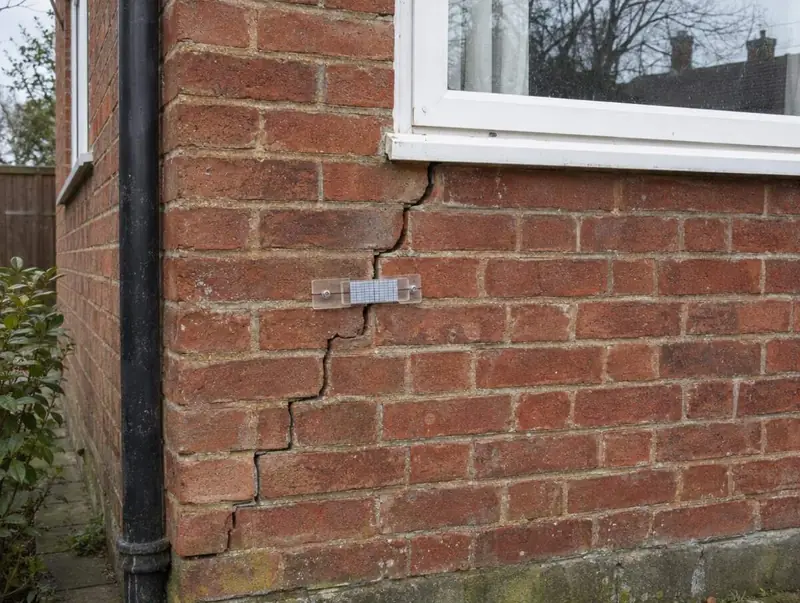
Subsidence cracks are usually tapered, run diagonally from door and window corners, and show on both faces of the wall. Fine vertical cracks in new plaster are more often shrinkage. An engineer’s inspection, sometimes with monitoring, is the reliable way to tell.
Does subsidence always need underpinning?
No, most subsidence is repaired without underpinning. When a leaking drain is fixed or nearby vegetation is managed, the ground usually stabilises and the house needs only crack repairs. Foundation work is kept for movement that continues after the cause has gone.
Related work in Barking and Dagenham
- Roof structure repairs
- Retaining wall repairs
- Structural surveys and crack monitoring
- Brick arch repairs
- Lintel replacement
Subsidence repairs near Barking and Dagenham
Photos of the inside and outside of the cracked wall are the quickest way to start; send them and we will reply about your Barking and Dagenham home with a guide price.