Spalding · Lincolnshire
Resin injection ground stabilisation in Spalding
A sunken floor slab or a settled corner in a Spalding home can sometimes be treated from the surface with expanding resin. Levels are read throughout, and monitoring afterwards shows whether the ground is holding before the cracks are repaired.
Guide price from£785per metre of wall treated inc VAT
- Postcodes
- PE11
- Population
- about 31,000
- Area
- Lincolnshire
- Pricing region
- East Midlands
What should you know about the ground under Spalding?
We cover Spalding and its postcode districts PE11, part of Lincolnshire, with a population of roughly 31,000. Nearby, we also cover Boston (14 miles), Peterborough (15 miles) and Wisbech (15 miles).
Parts of Lincolnshire have clay that can shrink near trees in dry spells. Ground movement here is more often linked to soils, drains and trees than to mining. What you mostly find across Lincolnshire: Victorian terraces in Lincoln and Grimsby, fenland brick houses, seaside bungalows and post-war estates.
Guide prices for resin injection ground stabilisation in Spalding
The ranges below reflect typical East Midlands costs for resin injection ground stabilisation, including VAT. Scaffold, access and making good can push a job to the top of the range.
| Item | Guide price | Per |
|---|---|---|
| Resin injection ground stabilisation | £785 – £1,450 | per metre of wall treated |
| Typical domestic project | £4,900 – £14,700 | per project |
| Level monitoring after treatmentest. | £345 – £880 | per programme |
Methods for resin injection ground stabilisation
Slab void filling and lifting
Small holes are drilled through the floor, and resin is fed into the void between the slab and the fill. As it expands it fills the gap and can lift the slab by small, controlled amounts. Floor coverings are lifted locally and the holes filled afterwards.
Best for: Sunken concrete ground floors and garage slabs
Injection beneath strip footings
Holes are drilled at close spacing along the wall, and tubes are placed at one or more depths below the footing. Resin is injected in stages from the bottom up, building a stiffened zone of ground under the wall while levels are read continuously.
Best for: Settled walls on loose or washed-out soil at shallow depth
From first photo to finished repair
Is resin suitable?
Send photos and any reports you hold. We give a free initial assessment, and an independent engineer then checks soil type, depth to firm ground and the cause. We can arrange the engineer. Clay and tree problems need particular care.
Ground and drain checks
Trial pits or probes confirm the soil profile, and a CCTV drain survey checks for leaks and for pipes in the injection zone. Damaged drains are repaired first, so resin is not lost into them or used to treat a cause that is still active.
Injection day
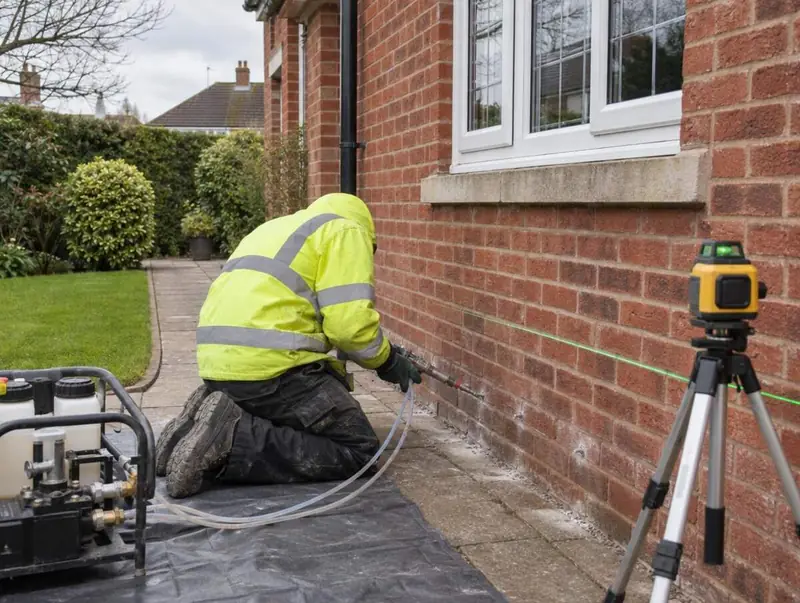
Holes are drilled, tubes placed and resin injected in stages while laser levels on the wall are watched for any rise. Most domestic jobs are done from outside, with little mess. Holes are filled and joints made good at the end.
Symptoms that point to resin injection ground stabilisation
- Gaps opening beneath a ground-floor slab or path
- A corner that has dropped but no longer moves with the seasons
- Cracks over a section of wall built on loose fill
Rules for resin injection ground stabilisation in England
In England, underpinning and other work that alters or strengthens a wall or foundation is building work under the Building Regulations (Part A, structure), so building control approves and inspects it. Like-for-like repairs often are not, and we tell you which applies before a price is agreed. Work to a party wall, or excavation close to a neighbour’s foundations, can also need a notice under the Party Wall etc. Act 1996.
Frequently asked questions
How much should I budget for resin injection ground stabilisation in Spalding?
Guide prices for resin injection ground stabilisation in Spalding start from about £785 per metre of wall treated, including VAT, on East Midlands rates. Your fixed written price follows photos or a survey and depends on the extent of the work and access.
Can you survey a property in Spalding?
Yes. We take enquiries from across Spalding, including PE11, and from nearby places such as Boston and Peterborough. Send photos for a free initial view and we will tell you what happens next.
Why do houses in Lincolnshire crack?
Lincolnshire has Lias, Oxford and Kimmeridge clays on the vales, chalk on the Wolds and soft silts and peat in the fens around Boston and Spalding. Fen ground and clay can both settle or shrink in dry years. Only an investigation can say why a particular building has moved.
Does resin injection work on clay soil?
Sometimes, but clay needs the most caution. If seasonal shrinkage from nearby trees is the cause, resin under the footing may not stop the drying below it. An engineer should look at the soil, the trees and the monitoring history before resin is chosen for a clay site.
Is the resin harmful to the ground or drains?
Once cured, the resin is inert in the ground. The practical risk is resin travelling into a damaged drain or service duct, which is why a CCTV drain survey comes first and any defects are repaired before injection. Services near the treated zone are located and protected.
Related work in Spalding
- Boundary and garden wall repairs
- Wall tie replacement
- Retaining wall repairs
- Bay window subsidence repairs
- Lintel replacement
Resin injection ground stabilisation near Spalding
Start with photos of the affected wall or floor in Spalding; a free initial assessment follows, then a fixed written price once the treatment is designed.