Dyfed · Wales
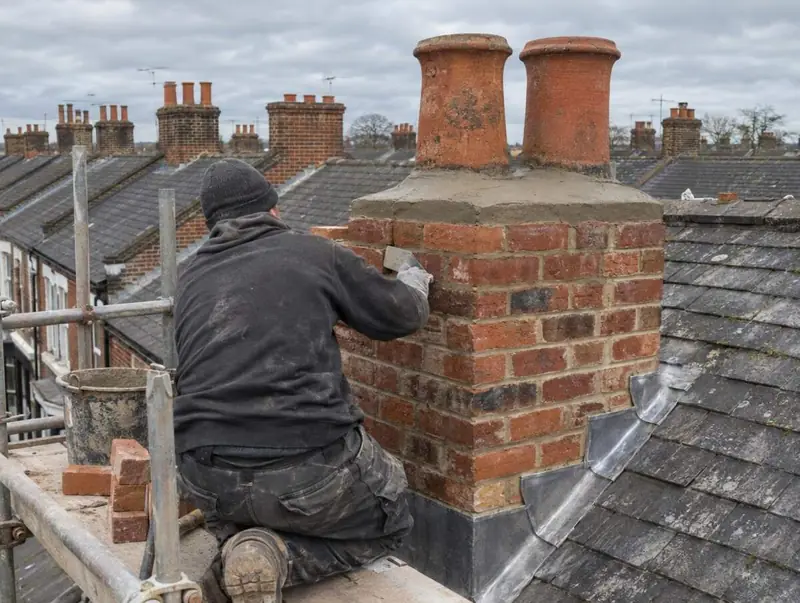
Chimney stack repairs in Dyfed
Dyfed has its own mix of ground and building types, and that shapes how chimney stack repairs is done here. Most of Dyfed is on firmer ground than the clay belts of the south-east.
Guide price from£460per stack inc VAT
- Area
- Dyfed
- Pricing region
- Wales
- Ground
- Mostly firmer ground
- Towns listed
- 6
What is the ground like in Dyfed?
The western edge of the South Wales coalfield lies beneath Llanelli, Ammanford and parts of Pembrokeshire, while the rest of the area is older hard rock with glacial deposits in the valleys.
Parts of Dyfed lie on a former coalfield, so a coal mining search is worth checking if movement has no obvious cause. Housing stock in Dyfed: Stone cottages, Victorian terraces in Llanelli and Carmarthen, and post-war estates.
Guide prices for chimney stack repairs in Dyfed
For Dyfed we use Wales rates. Treat the table as a budget guide, inc VAT; the price you pay is the one on your written quote.
| Item | Guide price | Per |
|---|---|---|
| Repointing, flaunching and minor brick repairs | £460 – £1,850 | per stack |
| Partial or full stack rebuild | £2,750 – £9,200 | per stack |
| Stack restraint or strappingest. | £370 – £1,100 | per stack |
Methods for chimney stack repairs
Flaunching and pot resetting
Old cracked flaunching is broken out, pots are lifted and reset or replaced, and new flaunching is formed to a fall so water runs off. Unused flues can be capped with ventilated caps, which keeps rain out while letting the flue breathe.
Best for: Loose pots and cracked mortar at the top of the stack
Partial or full rebuild
Where the lean is pronounced or the brickwork is badly decayed, the stack is taken down to sound masonry, often to roof level, and rebuilt plumb with new flashings and flaunching. Original bricks are cleaned and reused where possible to keep the appearance.
Best for: Badly leaning or decayed stacks
Stack restraint or strapping
A stack that has leaned slightly but is otherwise sound can be restrained with stainless straps or ties fixed back to the roof structure or the gable. This stops further movement without taking the stack down, and is often combined with repointing.
Best for: Slightly leaning stacks with sound brickwork
From first photo to finished repair
Look from the ground
Photos from the street and garden, ideally with a zoom, show us the lean, the pots, the flaunching and the state of the pointing. Damp patches inside are worth photographing too, as they help trace the route water is taking.
Scaffold to the stack
Safe access is set up with a working platform around the stack. On terraces we may need to agree access over a neighbour’s roof, and a council licence is arranged where the scaffold stands on the pavement.
Weatherproof and clear
Caps or cowls are fitted where agreed, the roof around the stack is checked for slipped tiles, and debris is cleared from gutters. You receive photos of the finished stack taken from the scaffold, since it is hard to see from the ground.
Symptoms that point to chimney stack repairs
- Cracked or missing flaunching around the top of the stack
- Damp patches on the chimney breast inside, especially after rain
- Bits of brick, mortar or render landing in the garden or gutter
- A stack visibly leaning when you look along the roof ridge
Do you need approval for chimney stack repairs in Wales?
In Wales, the Welsh version of the Building Regulations applies. Underpinning and other work that alters or strengthens the structure needs building control approval and inspection; like-for-like repairs often do not. The Party Wall etc. Act 1996 applies to work on party walls and excavation close to a neighbour’s foundations.
Towns in Dyfed we cover for chimney stack repairs
Frequently asked questions
Is the ground in Dyfed prone to subsidence?
The western edge of the South Wales coalfield lies beneath Llanelli, Ammanford and parts of Pembrokeshire, while the rest of the area is older hard rock with glacial deposits in the valleys. Parts of Dyfed lie on a former coalfield, so a coal mining search is worth checking if movement has no obvious cause. Only an investigation on site can say why a particular building has moved.
How much will chimney stack repairs cost in Dyfed?
On Wales rates, chimney stack repairs starts from about £460 per stack, including VAT. The written price depends on the extent of the damage, access and whether an engineer or building control is needed.
Is a leaning chimney dangerous?
A leaning chimney can become dangerous, because stacks are heavy and stand high above the roof. A slight, long-standing lean may be stable for now, but a lean that is worsening, or loose bricks and pots, should be looked at quickly. Keep people away from below if anything looks loose.
Should I remove my chimney stack instead of repairing it?
It depends on whether you use the flue, the stack’s condition and how it relates to the house next door. Taking a stack down below the roofline changes the structure and the roof, and on a terrace it can affect your neighbour. We can price both options.
What if a chimney breast below has been removed?
Where the breast has gone but the stack is still on the roof, how that stack is now held up is a structural question. Cracking in nearby ceilings or a dropped stack are warning signs. An independent chartered structural engineer should assess it before any repair, and we can arrange one.