Hayling Island · Hampshire
Bowing wall repairs in Hayling Island
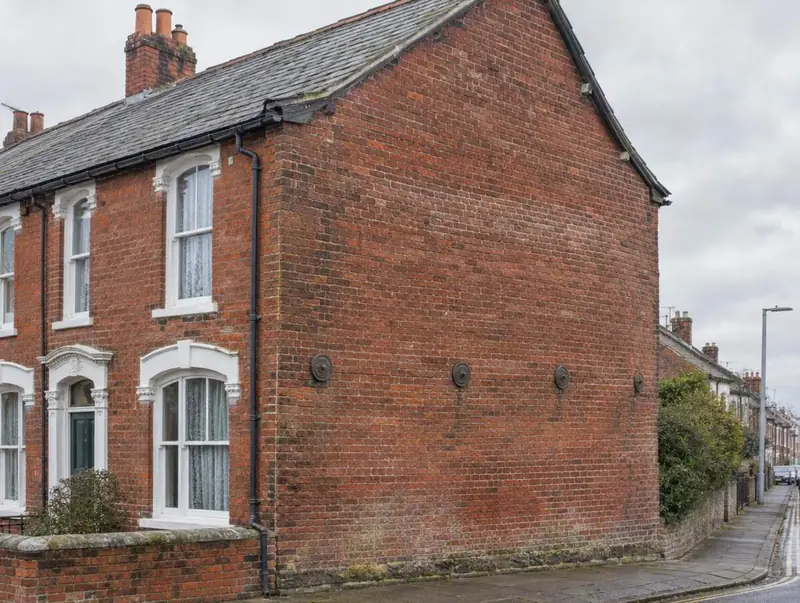
A slight lean is common on houses of a certain age in Hayling Island, and many have stood that way for generations. A growing bow, crushing bricks or a gap opening at the skirting is different, and is worth checking promptly.
Guide price from£1,100per wall inc VAT
- Postcodes
- PO11
- Population
- about 17,000
- Area
- Hampshire
- Pricing region
- South East
Why does the ground in Hampshire matter for bowing wall repairs?
Hayling Island, Hampshire: about 17,000 residents across postcode districts PO11. Nearby, we also cover Emsworth (5 miles), Havant (5 miles) and Portsmouth (5 miles).
Shrinkable clay is widespread in Hampshire. Ground movement here is more often linked to soils, drains and trees than to mining. Across Hampshire, most homes are Victorian terraces in Portsmouth and Southampton, 1930s semis, and large post-war and new-build estates.
How much will bowing wall repairs cost in Hayling Island?
For Hayling Island we use South East rates. Treat the table as a budget guide, inc VAT; the price you pay is the one on your written quote.
| Item | Guide price | Per |
|---|---|---|
| Lateral restraint for a typical gable | £1,100 – £3,350 | per wall |
| Remedial restraint ties installed | £30 – £65 | per tie |
| Partial rebuild of a badly distorted sectionest. | £3,350 – £8,950 | per section |
Which repair method suits a home in Hayling Island?
Restraint ties into the floor
Stainless restraint ties are drilled through the wall and fixed into the floor joists or into blocking between them. Where joists run parallel, noggins are fitted across several joists so the tie has something solid to hold. A neat plate or a buried fixing is left on the outside face.
Best for: Walls bowing at floor level where joists run alongside
Stitching a delaminating wall
Where the layers of a solid wall have separated, long stainless ties are drilled in from the face and bonded into the inner layer to bind the wall together again. This is often combined with restraint ties, so the wall is both reconnected through its thickness and tied back to the structure.
Best for: Solid walls where the outer layer has pulled away
What happens when we carry out bowing wall repairs in Hayling Island?
Assess the bow
We look at where the wall bows, how far it is out of plumb and how the floors and roof meet it. Photographs from your phone held flat against the wall often show the shape clearly before anyone visits.
Fit the ties and straps
Ties are drilled through and fixed, or straps fitted and secured, at the spacing specified. Any rebuild is carried out at this stage, with temporary propping in place until the new brickwork has gained strength.
Close up and make good
Boards are relaid, plaster and outside fixings made good, and cracked joints repointed. You receive a record of the restraint positions, which helps if you sell or if an engineer needs to check the wall again later.
Signs you may need bowing wall repairs
- Gutters or the roof edge no longer lining up with the wall
- Horizontal cracking at first-floor or ceiling level
- Gaps opening between floorboards and the skirting on an outside wall
Rules for bowing wall repairs in England
In England, underpinning and other work that alters or strengthens a wall or foundation is building work under the Building Regulations (Part A, structure), so building control approves and inspects it. Like-for-like repairs often are not, and we tell you which applies before a price is agreed. Work to a party wall, or excavation close to a neighbour’s foundations, can also need a notice under the Party Wall etc. Act 1996.
Bowing wall repairs in Hayling Island: questions and answers
How much should I budget for bowing wall repairs in Hayling Island?
Guide prices for bowing wall repairs in Hayling Island start from about £1,100 per wall, including VAT, on South East rates. Your fixed written price follows photos or a survey and depends on the extent of the work and access.
Can you survey a property in Hayling Island?
Yes. We take enquiries from across Hayling Island, including PO11, and from nearby places such as Emsworth and Havant. Send photos for a free initial view and we will tell you what happens next.
Why do houses in Hampshire crack?
Central Hampshire is chalk, while the south around Portsmouth, Southampton and the New Forest fringe and the north-east around Farnborough sit on London Clay, Reading Beds and other clays and sands. The clay areas see seasonal movement near trees. Only an investigation can say why a particular building has moved.
Can a bowing wall be pushed back straight?
Usually not. Masonry rarely returns to plumb without cracking, so the normal aim is to stop further movement and leave the wall where it is. If the bow is too great to accept, that section is rebuilt rather than forced back.
What is lateral restraint?
Lateral restraint is the connection that stops a wall moving sideways, provided by tying it to the floors and roof. Older houses often have little or none, especially where joists run parallel to the wall. Remedial ties and straps add that connection after the event.
Related work in Hayling Island
- Extension pulling away repairs
- Chimney stack repairs
- Bay window subsidence repairs
- Retaining wall repairs
- Crack stitching
Bowing wall repairs near Hayling Island
If a wall in Hayling Island began bowing after building work next door, dated photos help us suggest who should look at it first.