Cambridge · Cambridgeshire
Bowing wall repairs in Cambridge
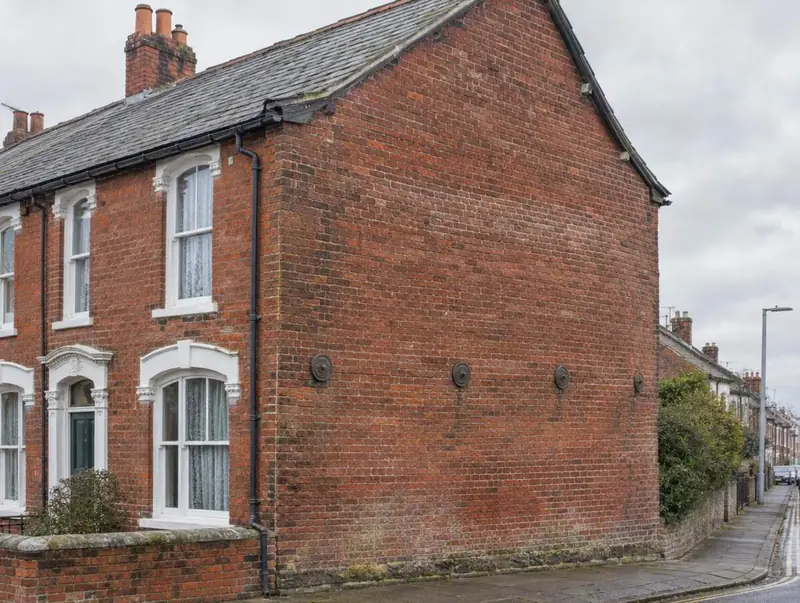
Restraint ties and straps are the usual fix for a bowing wall in Cambridge, tying the masonry back into the joists or rafters. Where joists run alongside the wall, we add blocking first so the ties have something solid to grip.
Guide price from£1,050per wall inc VAT
- Postcodes
- CB2, CB4
- Population
- about 150,000
- Area
- Cambridgeshire
- Pricing region
- East of England
Is Cambridgeshire prone to ground movement?
Cambridge is in Cambridgeshire and takes in postcode districts CB2, CB4. About 150,000 people live there. Nearby places we cover include Royston (12 miles), St Ives (12 miles) and Newmarket (13 miles).
Much of Cambridgeshire sits on clay that shrinks in dry summers and swells in wet winters. Ground movement here is more often linked to soils, drains and trees than to mining. Typical buildings in Cambridgeshire: Victorian terraces in Cambridge and Peterborough, fen-edge cottages, and extensive post-war and new-build estates.
Bowing wall repairs prices in Cambridge
The ranges below reflect typical East of England costs for bowing wall repairs, including VAT. Scaffold, access and making good can push a job to the top of the range.
| Item | Guide price | Per |
|---|---|---|
| Lateral restraint for a typical gable | £1,050 – £3,150 | per wall |
| Remedial restraint ties installed | £25 – £65 | per tie |
| Partial rebuild of a badly distorted sectionest. | £3,150 – £8,400 | per section |
How we usually approach bowing wall repairs
Partial rebuild
A section that has bowed beyond safe limits, or where bricks have crushed, is propped, taken down and rebuilt plumb with restraint built in. It is the most disruptive option, so it is kept to the area that genuinely needs it.
Best for: Badly distorted sections that cannot be tied back
Restraint ties into the floor
Stainless restraint ties are drilled through the wall and fixed into the floor joists or into blocking between them. Where joists run parallel, noggins are fitted across several joists so the tie has something solid to hold. A neat plate or a buried fixing is left on the outside face.
Best for: Walls bowing at floor level where joists run alongside
What happens during bowing wall repairs, step by step?
Open up inside
Floorboards or a ceiling strip are lifted along the affected wall to expose the joists. We fit noggins where joists run alongside, and plan furniture moves with you, since this is the most disruptive part of the job.
Fit the ties and straps
Ties are drilled through and fixed, or straps fitted and secured, at the spacing specified. Any rebuild is carried out at this stage, with temporary propping in place until the new brickwork has gained strength.
Close up and make good
Boards are relaid, plaster and outside fixings made good, and cracked joints repointed. You receive a record of the restraint positions, which helps if you sell or if an engineer needs to check the wall again later.
What to look for before calling about bowing wall repairs
- Gutters or the roof edge no longer lining up with the wall
- Gaps opening between floorboards and the skirting on an outside wall
- A visible belly in the wall when you sight along it
Rules for bowing wall repairs in England
In England, underpinning and other work that alters or strengthens a wall or foundation is building work under the Building Regulations (Part A, structure), so building control approves and inspects it. Like-for-like repairs often are not, and we tell you which applies before a price is agreed. Work to a party wall, or excavation close to a neighbour’s foundations, can also need a notice under the Party Wall etc. Act 1996.
Questions about bowing wall repairs in Cambridge
How much will bowing wall repairs cost in Cambridge?
Guide prices for bowing wall repairs in Cambridge start from about £1,050 per wall, including VAT, on East of England rates. Your fixed written price follows photos or a survey and depends on the extent of the work and access.
Do you cover Cambridge?
Yes. We take enquiries from across Cambridge, including CB2, CB4, and from nearby places such as Royston and St Ives. Send photos for a free initial view and we will tell you what happens next.
Is the ground in Cambridgeshire prone to subsidence?
Gault Clay underlies much of the Cambridge area and Oxford Clay the west of the county around Peterborough and Huntingdon, while the northern fens are peat and silt that can shrink as they dry. Both clay and peat ground can move with the seasons. Only an investigation can say why a particular building has moved.
Does a bowing wall need an engineer?
Often it does, especially if the bow is large, growing or linked to removed internal walls or chimney breasts. Small, long-standing bows can sometimes be restrained to a standard detail. Where the repair needs an engineer’s design or sign-off, we can arrange an independent chartered structural engineer.
Will I need to move out during bowing wall repairs?
Usually not. Restraint work means lifting some floorboards or a strip of ceiling along one wall, so a room or two is disrupted for a few days. A partial rebuild of an external wall can be more involved, and we will talk it through with you first.
Other structural repairs in Cambridge
- Boundary and garden wall repairs
- Structural crack repairs
- Lintel replacement
- Subsidence repairs
- Floor joist repairs
Bowing wall repairs near Cambridge
Once the restraint scheme and floor layout at your Cambridge property are settled, our guide figure becomes a fixed price in writing.