Scotland
Structural repairs in Scottish Borders
Structural repairs across Scottish Borders: subsidence, cracks, underpinning, wall ties, lintels and claim repairs. Shrinkable clay is less common in Scottish Borders than in south-east England.
- Nation
- Scotland
- Pricing region
- Scotland
- Towns listed
- 4
- Mining legacy
- Not a major factor
What is the ground like in Scottish Borders?
The Borders are mostly older hard rock with glacial till and river gravels along the Tweed and its tributaries. Stone mill towns and rubble walls shape most structural repairs.
Ground movement here is more often linked to soils, drains and trees than to mining.
What usually causes cracking in Scottish Borders?
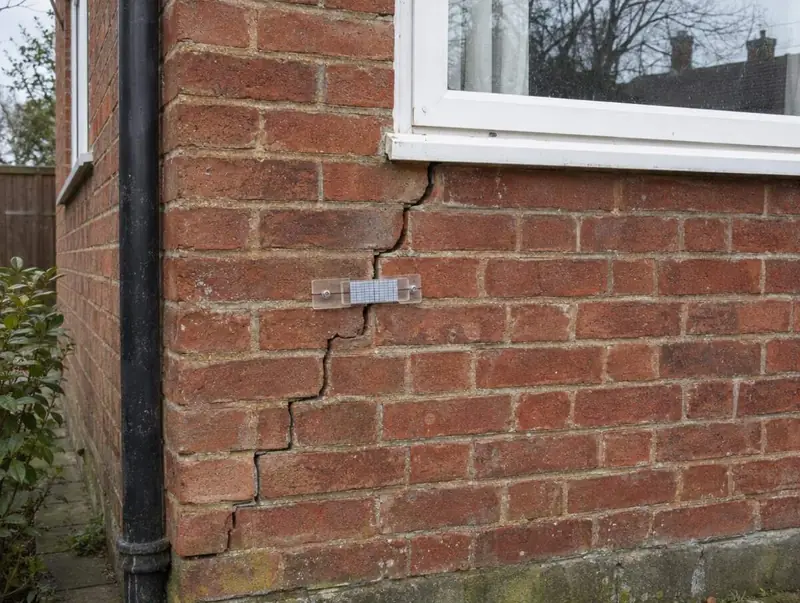
In Scottish Borders, cracking usually comes back to one of these. We rule each in or out before recommending a repair.
- Soft spots, made ground or fill under footings rather than clay shrinkage
- Heavy stone chimneys and gables pulling away from the house
- Weathered lime mortar letting stone walls spread
- Leaking or broken drains washing fine soil out from under footings
- Extensions and bays moving differently from the main house
What kind of buildings are common here?
Whinstone and sandstone mill-town houses, rural cottages and post-war estates.
Which repairs do we carry out in Scottish Borders?
- Floor joist repairs
- Roof structure repairs
- Chimney stack repairs
- Concrete repairs
- Structural surveys and crack monitoring
- Lintel replacement
- Brick arch repairs
- Extension pulling away repairs
- Retaining wall repairs
- Structural crack repairs
- Gable end wall repairs
- Resin injection ground stabilisation
- Bowing wall repairs
- Crack stitching
- Boundary and garden wall repairs
- Wall tie replacement
- Subsidence insurance claim repairs
- Bay window subsidence repairs
- Underpinning
- Subsidence repairs
Guide prices in Scottish Borders
A selection of guide prices on Scotland rates, including VAT. Each repair page has the full table.
| Item | Guide price | Per |
|---|---|---|
| Crack stitching: crack stitching with stainless helical bars | £75 – £170 | per metre of crack |
| Wall tie replacement: semi-detached house | £2,400 – £4,750 | per house |
| Bowing wall repairs: lateral restraint for a typical gable | £950 – £2,850 | per wall |
| Structural surveys and crack monitoring: structural engineer's inspection and report | £475 – £1,900 | per property |
Towns we cover in Scottish Borders
We list 4 towns in Scottish Borders, covering 4 postcode districts in the EH and TD postcode areas. The largest are Hawick (about 14,000 people), Galashiels (about 10,000 people) and Peebles (about 8,500 people). Each town page has local postcodes, nearby places and the repairs we carry out there.
Do repairs in Scottish Borders need approval?
In Scotland, structural alterations generally need a building warrant from the council’s building standards service; small repairs often do not. There is no Party Wall Act in Scotland.
Questions about structural repairs in Scottish Borders
Do you cover the whole of Scottish Borders?
Yes. We take enquiries from across Scottish Borders, including Hawick, Galashiels, Peebles and Kelso. A free initial assessment from your photos is the first step.
Is Scottish Borders affected by subsidence?
Clay shrinkage is less of a concern in Scottish Borders, so other causes such as drains, poor footings or older walls are checked first. Ground movement here is more often linked to soils, drains and trees than to mining. Whether a particular building has moved, and why, needs an investigation on site.
How much do structural repairs cost in Scottish Borders?
It depends on the repair. On Scotland rates, wall tie replacement on a semi-detached house from about £2,400 per house and lateral restraint for a bowing gable from about £950 per wall, including VAT. Your written price follows photos or a survey.
What should I send for a free assessment in Scottish Borders?
Photos of each crack inside and out with a coin or tape for scale, a wider shot showing where it is on the building, your postcode in Scottish Borders, and when you first noticed it. If an insurer is involved, include the claim reference.